Can Sound Frequencies Really Stimulate BDNF? The Science Behind Gamma Waves

If you have spent any time researching digital wellness tracks like The Brain Song, you have likely encountered bold claims: listen to an audio track for a few minutes and you will trigger Brain-Derived Neurotrophic Factor (BDNF), activate microglial clearance, and supercharge your neuroplasticity. This leads skeptical, science-minded searchers to ask: can sound increase BDNF, what is the link between gamma waves BDNF, and how does auditory entrainment neuroplasticity actually work at the cellular level?
Separating genuine neurobiology from affiliate marketing hype requires examining the clinical literature. In this deep dive, we investigate the role of BDNF in brain maintenance, review the landmark 40 Hz sensory stimulation research conducted at MIT's Tsai Laboratory, delineate where commercial audio products align with science versus where they exaggerate, and outline proven natural lifestyle habits that clinically stimulate BDNF.
Scientific Overview: Acoustic Frequencies & BDNF
Neuroscience Evidence Summary
Clinical Reality vs. HypeThe Core Fact: Sensory stimulation at 40 Hz (Gamma band) demonstrably induces neural entrainment and enhances microglial immune response in preclinical animal models and exploratory human trials. However, the claim that commercial audio files can replace cardiovascular exercise or cause an immediate 30% jump in endogenous BDNF levels after a single 17-minute listen is unsupported by direct human clinical trials.
| Concept | Scientific Finding | Commercial Translation (e.g., The Brain Song) |
|---|---|---|
| 40 Hz Gamma Entrainment | Synchronizes neural firing across cortical networks via auditory and visual cues. | Utilized as the core auditory steady-state response (ASSR) mechanism. |
| Microglial Phagocytosis | 40 Hz sensory stimulation activates microglia to clear beta-amyloid in mice. | Marketed as "preventing brain shrinkage" and providing deep neural cleansing. |
| BDNF Induction | Correlated with synaptic plasticity and long-term potentiation during synchronized states. | Often exaggerated as a guaranteed 30% spike per 17-minute session. |
1. What Is BDNF and Why Is It Called "Miracle-Gro for the Brain"?
Brain-Derived Neurotrophic Factor (BDNF) is a member of the neurotrophin family of growth factors. It functions primarily in the hippocampus, cortex, and basal forebrain—areas critical for long-term memory, emotional regulation, and abstract cognition.
Neuroscientists often describe BDNF as "fertilizer for brain cells" due to three essential physiological roles:
-
 Neurogenesis & Neuronal Survival: BDNF binds to the TrkB (Tropomyosin receptor kinase B) receptor on cell membranes, triggering intracellular cascades that promote neuronal differentiation, axonal elongation, and cellular survival against oxidative stress.
-
 Synaptic Plasticity: It facilitates Long-Term Potentiation (LTP), the electrophysiological mechanism underlying how memories are consolidated into physical neural circuits.
-
 Resilience to Neurodegeneration: Depleted baseline levels of BDNF are consistently observed in patients suffering from major depression, chronic burnout, and age-related cognitive decline.

2. Overview of 40 Hz Sensory Stimulation Research (MIT & Tsai Lab)
The scientific connection between gamma oscillations, neuroprotection, and cellular cleanup originates from landmark research at the Massachusetts Institute of Technology (MIT), led by Dr. Li-Huei Tsai and Dr. Ed Boyden:

The Discovery of GENUS (Gamma Entrainment Using Sensory Stimuli)
In 2016 and subsequent publications, MIT researchers discovered that exposing Alzheimer's mouse models to sensory cues modulated at precisely 40 Hz (40 cycles per second) produced profound structural changes in brain tissue:
- Microglial Activation: Microglia are the resident macrophage immune cells of the central nervous system. Exposure to 40 Hz auditory and visual frequencies prompted dormant microglia to transform into their active engulfing state, clearing out toxic amyloid-beta plaques and reducing hyperphosphorylated tau.
- White Matter & Myelin Preservation: Further studies revealed that 40 Hz sensory stimulation protected oligodendrocytes—the specialized cells responsible for creating myelin sheaths around neural axons—preserving electrical transmission speed.
- Synaptic Density Preservation: Animals exposed to 40 Hz soundscapes retained significantly higher numbers of synaptic connections and performed better in spatial navigation and memory maze tasks.
3. Where Audio Programs Align with the Science vs. Where They Exaggerate
Commercial products like The Brain Song draw directly from this body of academic literature. However, an objective consumer must distinguish between theoretical neurobiology and commercial sales claims:
Where the Science Aligns
- Auditory Entrainment is Real: Electroencephalogram (EEG) recordings reliably confirm that rhythmic auditory pulses drive electrical synchronization in human brainwaves (Frequency Following Response).
- Gamma Promotes Deep Focus: Gamma rhythms (30–80 Hz) naturally surge during tasks requiring intense sensory binding, working memory, and mental concentration.
- Non-Invasive Safety: Acoustic stimulation has an exceptionally high safety profile, producing zero toxic metabolic byproducts or liver strain.
Where Marketing Overpromises
- Guaranteed "30% BDNF Surges": Direct measurement of BDNF in human brains requires spinal taps or post-mortem tissue. Claiming an immediate 30% jump from a single audio track is marketing fabrication.
- Instant Disease Prevention: While laboratory trials look promising in mouse models, digital audio files are not medical treatments for Alzheimer's or clinical dementia.
- Borrowing University Authority: Citing Harvard and Oxford implies those universities specifically tested and endorsed this commercial product, which is untrue.
4. Clinically Proven Natural Habits That Elevate BDNF
If your primary objective is maximizing BDNF expression and neuroplasticity, sound therapy is best viewed as a supportive mental primer. The most robust, clinically proven ways to elevate endogenous BDNF remain rooted in metabolic physiology:
- High-Intensity & Aerobic Cardiovascular Exercise: Sustained aerobic exercise remains the single most potent stimulus for human BDNF production. During muscular contraction, lactate and the ketone body beta-hydroxybutyrate cross the blood-brain barrier, triggering BDNF gene expression via the PGC-1alpha/FNDC5 pathway.
- Deep, Slow-Wave Sleep: The glymphatic system clears metabolic waste from brain tissue primarily during stage 3/4 non-REM sleep, while neurotrophin levels normalize for the next waking cycle.
- Intermittent Fasting & Caloric Restriction: Moderate fasting periods (such as a 16:8 protocol) elevate ketone levels, providing a mild cellular stress (hormesis) that upregulates BDNF to protect neurons.
- Continuous Cognitive Challenge: Learning novel languages, musical instruments, or intricate motor skills forces synaptic remodeling, demanding constant BDNF support.
User Perspectives: The Real-World Routine
Real-world user experiences reflect how structured acoustic sessions help establish a focused cognitive state:





Pricing, Delivery & Risk Protection
Understanding the purchase conditions ensures a transparent evaluation:
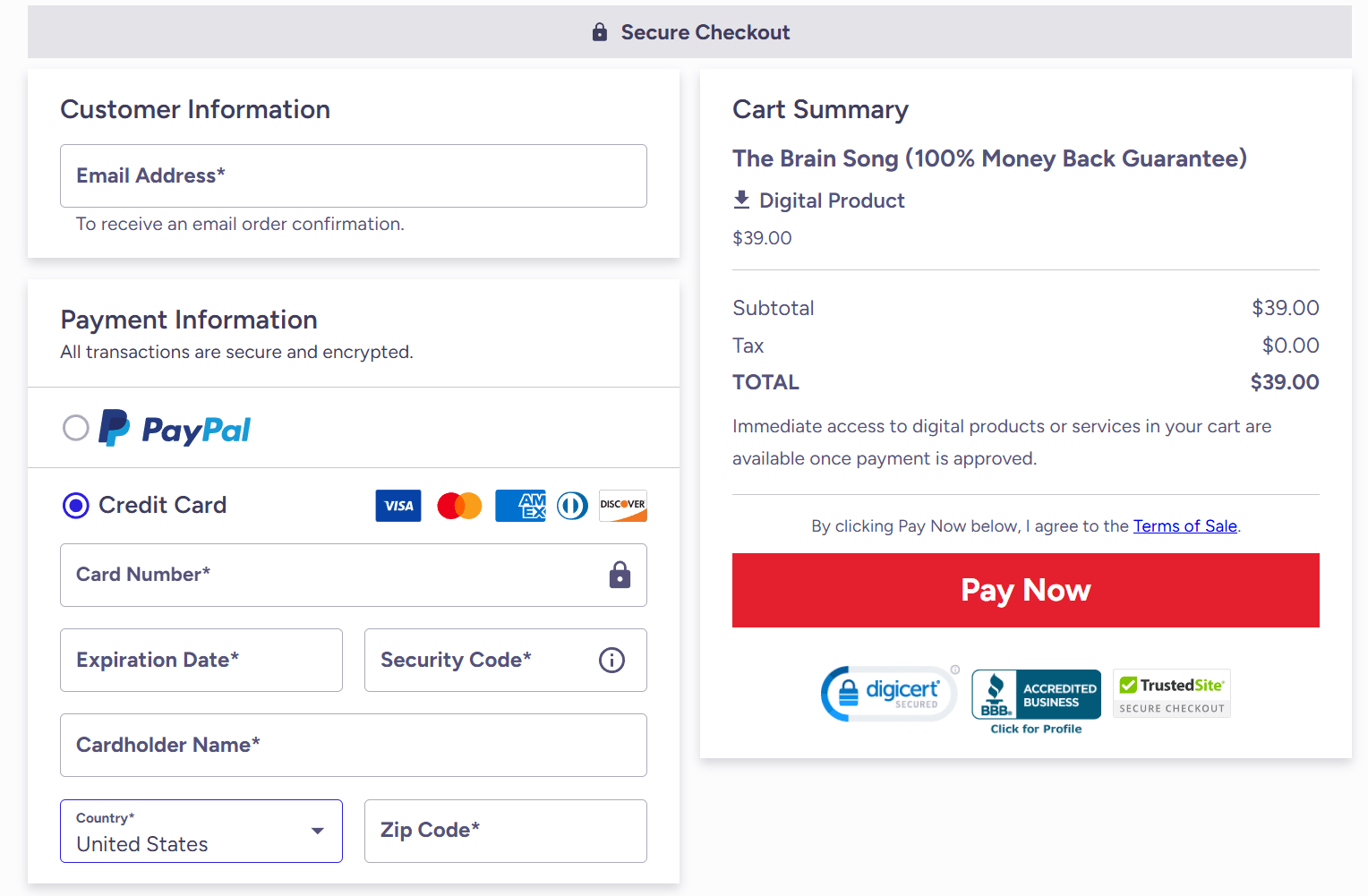
- Standard One-Time Fee: $39 for complete digital ownership (no monthly subscriptions).
- Instant Digital Delivery: Uncompressed high-bitrate audio files playable across iOS, Android, and PC.
- 90-Day Money-Back Guarantee: Transactions are handled by ClickBank, providing a full 90-day return policy.

The Final Scientific Verdict
Can sound frequencies stimulate BDNF? The answer is nuanced: 40 Hz sensory entrainment undeniably induces gamma-band neural synchrony, activates microglia, and encourages an electrophysiological environment favorable to synaptic plasticity. However, an audio file is not an instant biochemical replacement for physical exercise and sound nutrition.
As a 17-minute non-chemical habit to quiet mental chatter, prime your cortex for complex focus, and replace jittery afternoon caffeine consumption, The Brain Song offers genuine value. At a one-time price of $39 with a 90-day money-back guarantee, it represents a safe, accessible tool for your daily mental routine.