How Water Freedom System Works: Atmospheric Water Explained
Article 3 of 10 • Technology explainer
How Water Freedom System Works: Atmospheric Water Explained
If you are searching for how Water Freedom System works, the short answer is condensation: the proposed system moves humid air across a cooled surface, collects the moisture that becomes liquid, and then directs that water through treatment and storage stages. The science is real, but the practical result depends on climate, equipment, electricity, hygiene, and maintenance.
This guide explains the process in plain language, from atmospheric humidity and dew point to collection, filtration, storage, and realistic performance. It also separates what the technology can theoretically do from what a particular DIY build can reliably deliver.
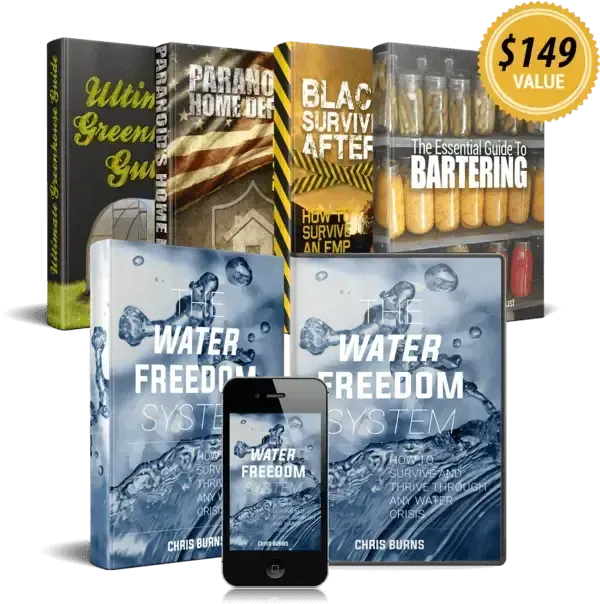
Water Freedom System is marketed as a digital guide for planning or building a DIY atmospheric water generator. It should not be confused with a completed, professionally certified appliance. The buyer may still need to source components, assemble the system, calculate power requirements, and verify water quality.
Quick Explanation
Air contains water vapor. Cooling air below its dew point can turn some of that vapor into liquid water. A working atmospheric water system must then collect the droplets hygienically, treat them appropriately, and protect them during storage.
What Is Atmospheric Water Generation?
Atmospheric water generation, commonly abbreviated as AWG, is the process of recovering water from moisture in the surrounding air. Unlike a rain barrel, it does not wait for rainfall. Unlike reverse osmosis, it does not begin with a tap, well, or other conventional water source.
A condensation-based AWG behaves in some ways like a dehumidifier. Air enters the system, a cooling surface removes heat, and water vapor condenses when the surface becomes colder than the air’s dew point. The resulting droplets are captured and directed toward a reservoir.
The main engineering challenge is efficiency. Air may contain moisture, but collecting useful quantities requires moving and cooling a large volume of air. The warmer and more humid the environment, the more favorable the conditions may be. In dry or cool conditions, the system can require more energy for less water.
What Water Freedom System Adds
Water Freedom System is positioned as an educational roadmap for understanding this process and assembling a home-scale project. The advertised materials may include diagrams, written instructions, component guidance, video lessons, and supplementary preparedness material.
The guide may make the subject easier to approach, but the final performance still comes from the physical build. A document cannot change local humidity or guarantee that separately sourced components will work together perfectly.
The Water Freedom System Process in Five Stages
Stage 1: Air Intake and Airflow
The first stage is moving surrounding air into the system. Fans, vents, filters, ducting, and the enclosure affect how efficiently air reaches the cooling surface. Too little airflow may reduce collection, while poorly designed airflow can waste power or create uneven cooling.
Air intake location also matters. Dusty, smoky, chemically contaminated, or poorly ventilated areas may introduce unwanted particles or odors. The system should be placed where airflow is clean and unrestricted.
Stage 2: Cooling Below the Dew Point
The dew point is the temperature at which air becomes saturated and can no longer hold all of its water vapor. When the cooling surface reaches or falls below that point, condensation can begin.
A refrigeration-based design may use a compressor, condenser, evaporator, refrigerant circuit, and fan. A smaller thermoelectric design may use an electronic cooling module. Each approach involves trade-offs in output, noise, energy use, heat removal, size, and reliability.
Stage 3: Condensation and Collection
Once droplets form, they must travel from the cold surface into a collection channel or reservoir. This sounds simple, but small design problems can create leaks, standing water, microbial growth, or contact with unsuitable materials.
Food-safe materials and cleanable surfaces are important considerations. The collection path should be designed so that water does not remain trapped in difficult-to-clean areas.
Stage 4: Filtration and Sanitation
Condensed water is not automatically safe to drink. It may contact coils, tubing, seals, containers, dust, microorganisms, or residues. Treatment should be selected based on the complete design and intended use.
Sediment filtration can remove particles. Activated carbon can improve taste and address certain compounds. Membrane systems target other dissolved substances. Ultraviolet treatment can help control susceptible microorganisms when correctly sized and maintained. No single filter should be treated as a universal solution.
Stage 5: Storage and Ongoing Maintenance
Treated water must be stored in a clean, covered container. Reservoirs, tubing, filters, cooling surfaces, fans, and electrical connections need regular inspection. A system that produces clean-looking water can still become unsafe if it is neglected.
Why Humidity Matters So Much
Relative humidity describes how much moisture the air contains compared with the maximum amount it could hold at that temperature. Higher humidity generally means more water vapor is available to collect. Lower humidity means the system must process more air to recover the same quantity.
Temperature changes the equation too. Warm air can hold more water vapor than cold air. A warm, humid room may provide favorable conditions, while a cold, dry room may produce very little even if the equipment is operating continuously.
This is why a single advertised gallon figure is not enough. A buyer in coastal Florida, for example, may experience different results from someone in Arizona, Colorado, Nevada, or a dry winter climate.
| Factor | Effect on the System | What to Measure |
|---|---|---|
| Relative humidity | Controls how much vapor is available | Hourly and seasonal humidity |
| Temperature | Changes the air’s moisture-holding capacity | Indoor and outdoor temperature |
| Dew point | Determines the cooling threshold for condensation | Local dew-point data |
| Airflow | Controls how much air reaches the cold surface | Fan capacity and system design |
| Operating time | More runtime may increase collection, but also energy use | Hours per day and gallons collected |
Stop: if you live in a consistently dry area, do not assume a blueprint can overcome the atmosphere. Check your local climate before purchasing expensive hardware.
How the Cooling System Produces Condensation
A refrigeration-based unit transfers heat away from the evaporator or cooling coil. Air passes across that cold surface. When the surface is below the air’s dew point, water vapor changes phase from gas to liquid.
The compressor and condenser then move heat elsewhere. That heat must be released into the surrounding environment. If the system is enclosed poorly or placed against a wall without ventilation, performance may suffer.
Thermoelectric cooling uses an electronic module to create a hot side and a cold side. It can be compact and easier to understand in some small projects, but it may have different efficiency and output limitations compared with a compressor-based system.
The specific design recommended by Water Freedom System should be reviewed carefully for component ratings, electrical requirements, ventilation, insulation, condensate drainage, and safe assembly. A general explanation of condensation does not substitute for a complete engineering review.

Water Freedom System Filtration and Water Safety
The treatment stage deserves as much attention as the cooling stage. A successful condensation process only means that water has changed from vapor to liquid. It does not prove that the water is appropriate for drinking.
Why Collection Materials Matter
Water may contact metal coils, plastic tubing, adhesives, seals, pumps, tanks, and filter housings. Some materials may be suitable for drinking-water contact while others may not be. The system should be designed with cleanable, appropriate materials.
Why Storage Matters
Water can be recontaminated after treatment. Warm, stagnant reservoirs and poorly maintained tubing may create conditions for microbial growth. Covered storage, routine cleaning, and appropriate replacement schedules are important.
Why Testing Matters
If the water is intended for drinking, a qualified laboratory can provide information that appearance and taste cannot. The right testing panel depends on the materials, environment, treatment method, and intended use.
How Much Electricity Does an Atmospheric Water Generator Use?
Atmospheric water generation is not a source of free energy. Fans move air, cooling equipment removes heat, pumps may move water, and control systems consume power. The energy required per gallon can change significantly with humidity and temperature.
In favorable humidity, the system may collect more water for a similar operating effort. In dry conditions, it may run for longer periods and produce less. That can increase the electricity cost per gallon.
To evaluate operating economics, measure the system’s power draw and operating time. Then compare kilowatt-hours consumed with the volume collected. Include standby power, cleaning, filter replacement, repairs, and any backup battery or solar equipment.
| Step | Calculation |
|---|---|
| Measure power | Record watts or kilowatts while operating |
| Measure runtime | Record hours per day |
| Estimate energy | Power multiplied by operating time |
| Calculate energy cost | Energy consumed multiplied by your utility rate |
| Calculate cost per gallon | Total operating cost divided by measured output |
What Parts May Be Required?
The exact list depends on the design, but a condensation-based project may involve several categories of equipment.
Cooling Components
Compressor, evaporator, condenser, refrigerant circuit, or thermoelectric cooling module.
Airflow Components
Fans, vents, intake filters, ducting, enclosure, and heat-dissipation pathways.
Collection Components
Condensate tray, food-safe tubing, fittings, pump, reservoir, tank, and overflow protection.
Treatment Components
Filtration, sanitation, ultraviolet treatment, replacement cartridges, and test supplies.
Electrical Components
Power supply, controls, switches, wiring, fuses, grounding, and protective devices.
Maintenance Supplies
Cleaning materials, replacement filters, seals, tubing, fasteners, and inspection tools.
The buyer should verify compatibility rather than substituting parts casually. Electrical and refrigeration work can create safety risks when performed without appropriate knowledge.
Water Freedom System Demo: What the User Experience May Involve
A typical project workflow begins with studying the digital guide before ordering components. The buyer then assesses climate, confirms the intended water use, creates a complete budget, and chooses a safe workspace.
- Read the complete instructions and identify unclear steps.
- Record local humidity, temperature, and dew-point conditions.
- Price new parts, used parts, tools, filtration, storage, and testing.
- Build the system according to the design and applicable safety requirements.
- Check for leaks, overheating, poor airflow, and electrical problems.
- Run initial batches without assuming they are safe to drink.
- Measure output and energy consumption under documented conditions.
- Clean and test the water path before considering consumption.
This is why the term “easy DIY” should be interpreted cautiously. A motivated beginner may learn the process, but refrigeration, wiring, water treatment, and sanitation deserve respect.
How Much Water Can Water Freedom System Produce?
Promotional pages have used “up to” claims ranging as high as 40–60 gallons per day. Those figures should not be treated as a guarantee. Actual production depends on the size and efficiency of the equipment, humidity, temperature, airflow, operating time, heat removal, and maintenance.
A smaller DIY build may produce much less than a commercial system. A humid summer day may produce more than a dry winter day. A system operating for a few hours cannot be compared fairly with one running continuously.
The most useful result is a documented local measurement. Record environmental conditions and output over multiple days. That evidence will tell you more than a maximum figure printed on a sales page.
Realistic Expectation Rule
Treat every advertised output as a ceiling until you see test conditions and independent measurements. Plan the system as supplemental water first, not as an immediate replacement for every household use.
Water Freedom System Compared With Other Water Sources
| Source | Main Advantage | Main Limitation |
|---|---|---|
| Atmospheric generation | Does not require a conventional water inlet | Requires humidity, electricity, and maintenance |
| Rainwater collection | Can collect large amounts during rainfall | Dependent on precipitation and local rules |
| Reverse osmosis | Can treat an existing water source | Needs feed water and produces wastewater |
| Stored water | Immediately available when properly stored | Requires space, rotation, and planning |
| Commercial AWG | Integrated design and manufacturer support | Higher purchase price |
A resilient household may combine several options: stored water for immediate emergencies, rainwater where appropriate, filtration for existing sources, and atmospheric generation as a supplemental project.
Common Misunderstandings About How Water Freedom System Works
Misunderstanding 1: The System Creates Water From Nothing
It recovers moisture that already exists in the air. The available moisture sets a physical limit.
Misunderstanding 2: Condensed Water Is Automatically Safe
Water may become contaminated through surfaces, tubing, storage, microorganisms, or poor maintenance. Treatment and testing remain important.
Misunderstanding 3: A Low Guide Price Equals a Low Total Cost
The guide is only one part of a possible build. Hardware, energy, tools, filters, and testing can substantially change the economics.
Misunderstanding 4: One User’s Output Predicts Everyone’s Output
Location, humidity, temperature, system size, and operating schedule differ. A testimonial is not a universal performance guarantee.
Misunderstanding 5: Solar Means No Operating Cost
Solar equipment has its own upfront, maintenance, replacement, and storage costs. It must be sized for the real load.
Is Water Freedom System a Legitimate Learning Tool?
The concept is legitimate as an educational subject. Atmospheric water generation has a real physical basis, and a DIY project can help a learner understand condensation, humidity, cooling, airflow, filtration, and storage.
Whether this particular guide is useful depends on the clarity and accuracy of its instructions, the quality of its component recommendations, the completeness of its safety information, and the support available after purchase. Those product-specific details should be verified from the current offer and the actual delivered material.
I would approach the purchase with a clear boundary: the guide may help plan a project, but it does not remove the need for competent assembly, suitable materials, responsible water treatment, or independent evaluation.
Frequently Asked Questions About How Water Freedom System Works
What is the main principle behind Water Freedom System?
It is based on condensation: cooling humid air below its dew point so water vapor can turn into liquid droplets.
Does atmospheric water generation need electricity?
Most active systems require electricity for fans, cooling, pumps, and controls. Solar power may be used only with a properly sized system.
Why does humidity affect water output?
Humidity determines how much water vapor is present in the air. Less humidity generally means less water is available to collect.
What is the dew point?
The dew point is the temperature at which air becomes saturated and water vapor can begin condensing into liquid water.
Is Water Freedom System a finished water generator?
The supplied descriptions present it as a digital guide. Confirm the current offer, but do not assume physical equipment is included unless stated clearly.
Can the collected water be used for drinking?
Do not assume that. Appropriate materials, filtration, sanitation, storage, and water-quality testing should be considered before consumption.
Can it work in a desert?
It may collect some moisture when conditions permit, but output and efficiency can be much lower in dry environments.
How long does a DIY build take?
The time depends on the design, component availability, tools, experience, troubleshooting, and whether qualified help is needed. Treat quick setup claims cautiously.
Can it replace municipal water?
It should not automatically be considered a whole-home replacement. It is more realistic to evaluate it as a supplemental source until measured performance proves otherwise.
What should I check before buying the guide?
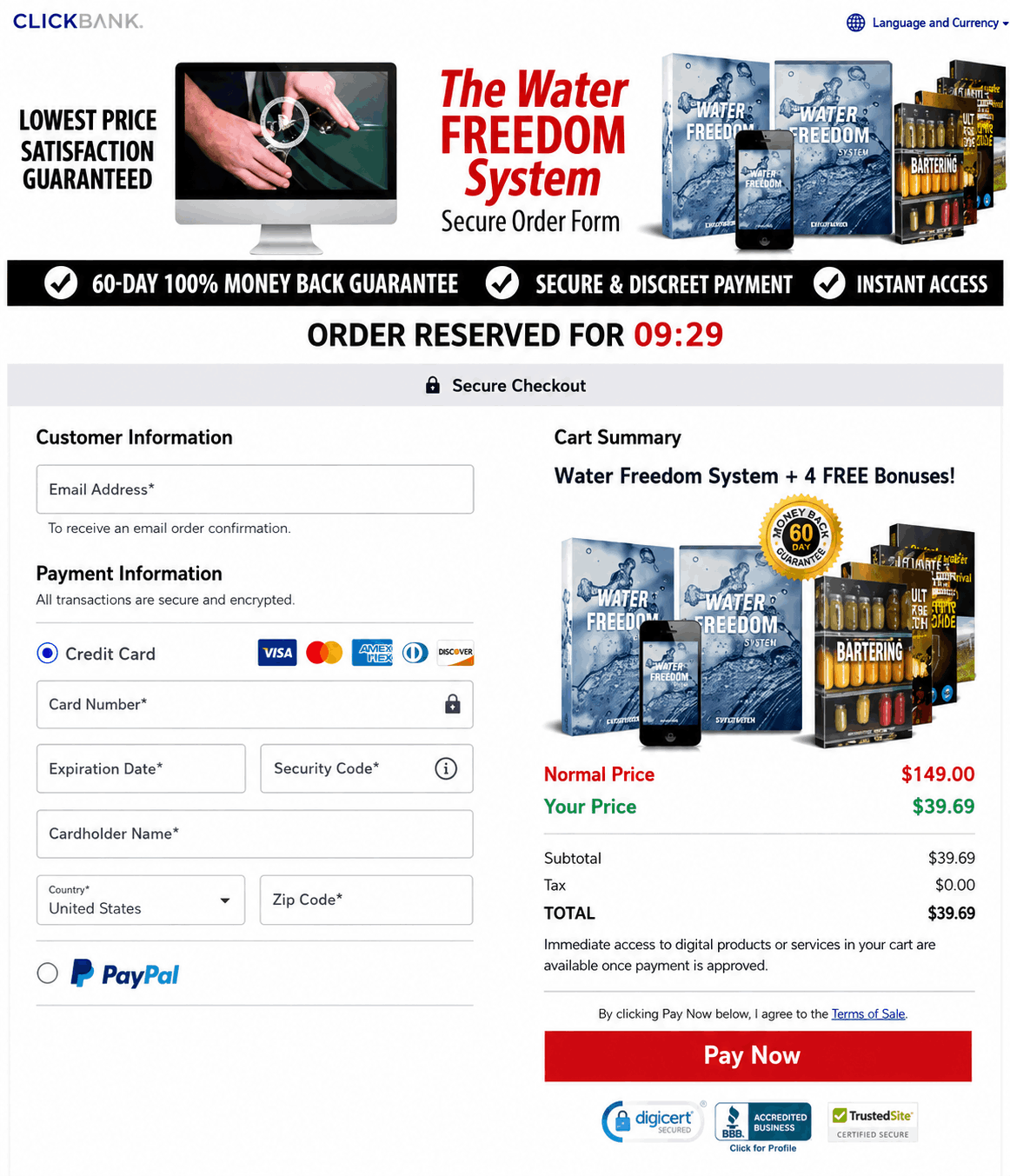
Check the exact deliverables, price, refund terms, support, component requirements, climate suitability, electricity needs, treatment guidance, and total project cost.
Final Explanation: Is Water Freedom System Right for You?
Water Freedom System works around a real and understandable process: humid air is cooled, moisture condenses, droplets are collected, and the water is treated and stored. The science is not mysterious, but the practical engineering is more than simply placing a cold surface in front of a fan.
The system’s usefulness depends on your environment and your willingness to manage the entire process. Humidity, temperature, cooling capacity, electricity, materials, filtration, storage, maintenance, and testing all matter.
If you enjoy DIY projects and want to study atmospheric water generation, the guide may be a reasonable place to begin. If you need immediate, certified, guaranteed water with little effort, consider stored water or a professional commercial solution instead.
Before You Buy: Five Questions
- Is the current purchase a guide, a machine, or both?
- What is the complete cost after hardware and tools?
- What humidity and temperature conditions support the advertised output?
- How will the water be treated, stored, and tested?
- What happens if the guide or physical build does not meet expectations?