Is Water From Air Safe to Drink? Water Freedom System Safety Guide
Article 9 of 10 • Water quality and safety guide
Is Water From Air Safe to Drink? Water Freedom System Safety Guide
Water from air sounds clean because it begins as invisible vapor, but condensation alone does not automatically create safe drinking water. If you are considering Water Freedom System or another atmospheric water generator, the central question is not only whether the equipment can collect droplets. You also need to know what those droplets contact, how they are treated, how they are stored, and how their quality is verified.
Water Freedom System is marketed as a digital DIY guide for building an atmospheric water generation project. That format may help a motivated buyer understand the process, but it also means the builder is responsible for selecting components, maintaining the collection path, choosing treatment, and deciding whether the finished water is suitable for its intended use.
This article explains the main safety questions, what different filters can and cannot do, why storage matters, when laboratory testing may be appropriate, and how to evaluate the system before relying on it for drinking or cooking.
Quick Answer: Is Water From Air Automatically Safe?
No. Atmospheric water may be suitable for drinking only after the collection materials, treatment system, storage, cleaning process, and water quality have been appropriately evaluated.
- Condensation is not the same as purification.
- A filter does not remove every possible contaminant.
- UV treatment requires correct operation and maintenance.
- Dirty tubing or storage can recontaminate water.
- Clear appearance and neutral taste do not prove safety.
How Atmospheric Water Becomes Liquid
Atmospheric water generation begins with air that contains water vapor. A fan moves the air across a surface cooled below its dew point. As the air cools, some vapor changes from gas to liquid and forms droplets.
This is the same broad principle behind condensation on a cold glass or moisture removal by an air conditioner. The process itself is real, but the resulting liquid can still contact equipment, dust, microorganisms, metals, plastics, sealants, and storage surfaces.
The safety question therefore begins after condensation. What is the collection surface made from? Is the tubing suitable for the intended use? Is the reservoir cleaned correctly? What treatment is used? How is the water tested?
What Can Contaminate Water From Air?
Water quality depends on the entire path from air intake to final use. Contamination can enter through the surrounding air, condensation surfaces, tubing, seals, filters, storage tanks, hands, cleaning practices, or extended storage.
Airborne Particles
Dust, smoke, pollen, outdoor pollution, indoor particles, and other suspended material may enter through the intake unless the airflow path is appropriately protected.
Equipment Materials
Coils, trays, tubing, sealants, plastics, metals, and coatings may affect water quality if they are unsuitable, damaged, dirty, or poorly maintained.
Microbial Growth
Moist surfaces, filters, tubing, and reservoirs can support microbial growth when cleaning and drying procedures are inadequate.
Storage Recontamination
Water that was initially clean can become contaminated in an open, dirty, warm, or poorly maintained reservoir.
These risks do not mean that atmospheric water generation is impossible. They mean the finished system must be treated as a water-handling system that requires design discipline and ongoing care.
Water Freedom System Filtration: What Does Each Stage Do?
Promotional descriptions associated with Water Freedom System mention filtration and purification concepts, but buyers should verify the exact components and claims in the current guide. Different treatment technologies perform different jobs, and no single filter removes every contaminant.
| Treatment Type | Common Purpose | Important Limitation |
|---|---|---|
| Screen or sediment filter | Captures some particles and debris. | Does not remove all dissolved substances or microorganisms. |
| Activated carbon | Can improve taste and odor and reduce certain substances. | Performance depends on media, contact time, flow, and contaminant. |
| Membrane treatment | May reduce certain dissolved contaminants depending on design. | Requires correct pressure, maintenance, and replacement. |
| Ultraviolet treatment | Can inactivate susceptible microorganisms when properly applied. | Requires adequate dose, clear water, power, and maintenance. |
| Mineral addition | May alter taste or water chemistry. | Does not substitute for disinfection or contaminant testing. |
A multi-stage system can be useful, but the phrase “multi-stage” does not by itself establish safety. Ask what each stage removes, how often it must be replaced, and whether the system has been evaluated for the intended source and use.
Review the current guide contents before choosing filtration components.
Why Condensation Does Not Equal Purification
Distillation and condensation can change the composition of water, but an atmospheric system is not automatically a laboratory distiller. The water may contact surfaces before collection, and the air itself may contain particles or microorganisms. In addition, storage can introduce new contamination after collection.
A low mineral level is not proof that water is safe. It may affect taste, corrosion, or the usefulness of certain treatment methods, but it does not answer every microbial or chemical question.
Likewise, a UV light is not a universal solution. It must receive the correct electrical power, deliver the required dose, remain clean, and operate with water conditions suitable for the treatment. A failed lamp or dirty sleeve may not be obvious without inspection.
Collection Materials Matter
The collection path may include a cold surface, tray, drain, tubing, fittings, pump, reservoir, filter housing, and storage container. Each material should be appropriate for the intended use and maintained according to suitable guidance.
Questions About Materials
- Is the material suitable for contact with the intended water?
- Could the material release metals, chemicals, odors, or residues?
- Are adhesives, sealants, lubricants, or refrigerants isolated from the water path?
- Can the parts be cleaned and inspected thoroughly?
- Are there dead spaces where water can remain stagnant?
- Can tubing and reservoirs be replaced when they age?
Repurposed appliances deserve particular caution. A component that was acceptable for dehumidifying room air is not automatically suitable for collecting drinking water. If you are unsure about materials or connections, consult a qualified professional.
Storage Is Part of Water Safety
A clean collection process can be undermined by poor storage. Water should be kept in a suitable, covered container that can be cleaned and inspected. The reservoir should not become a warm, stagnant environment where microorganisms can multiply.
Storage Checklist
- Use a suitable, clean, covered container.
- Keep the reservoir protected from dust, insects, and spills.
- Prevent unnecessary exposure to sunlight and heat.
- Clean according to appropriate instructions.
- Inspect tubing, seals, fittings, and pump connections.
- Avoid long periods of stagnant storage without a management plan.
- Label water that has not been evaluated for drinking.
Storage capacity should also match output. A system may collect water more quickly than the owner can safely use or maintain. Larger tanks increase the importance of cleaning, inspection, and contamination control.
Should Water From a DIY AWG Be Tested?
If water is intended for drinking or cooking, testing can be a sensible precaution, especially when the system is self-built, uses repurposed parts, or has an unusual collection path. The right tests depend on the materials, air environment, treatment stages, and intended use.
A qualified laboratory or water-quality professional can help determine which parameters are relevant. Possible considerations may include microbial indicators, metals, chemical contaminants associated with materials, pH, total dissolved solids, and other parameters selected for the specific system.
Testing should not be treated as a one-time substitute for maintenance. A system can change over time as filters age, tubing deteriorates, reservoirs become dirty, or operating conditions change.
| Evaluation Area | Question to Ask | Why It Matters |
|---|---|---|
| Microbial quality | Could bacteria or other organisms grow in the water path? | Moist surfaces and storage can support growth. |
| Materials | Could tubing, metals, coatings, or sealants affect the water? | Contact materials can influence chemical quality. |
| Air environment | What dust, smoke, chemicals, or pollution could enter? | Air quality affects the collection environment. |
| Treatment | Does each filter or UV stage address a defined concern? | Different technologies have different capabilities. |
| Storage | Can the tank and tubing remain clean and protected? | Post-treatment contamination can occur during storage. |
Review the Water Freedom System materials before planning your water-quality process.
Water Freedom System and UV Purification
Promotional descriptions may mention ultraviolet treatment. UV can be useful when correctly designed and maintained, but it is not a universal guarantee of clean drinking water.
UV performance can depend on lamp output, exposure time, water clarity, flow rate, electrical operation, sleeve cleanliness, and replacement schedule. If water contains particles that shield microorganisms, treatment may not work as intended.
A UV stage also does not necessarily remove dissolved chemicals, metals, taste, odor, or particles. It should be considered one component of a treatment plan, not a substitute for evaluating the complete water path.
Ask the seller or guide documentation for specific information about the UV component, installation, flow rate, maintenance, replacement, and performance conditions. If that information is unclear, seek professional advice before consuming the water.
Water Freedom System and Filter Maintenance
Filters do not last forever. Their useful life depends on water volume, air quality, filter type, storage, microbial conditions, and manufacturer guidance. A filter that appears clean may still have reached its service limit, while a visibly dirty filter may indicate that the intake or collection environment needs attention.
Track Replacement Dates
Record when every filter is installed and replace it according to appropriate instructions rather than guessing.
Inspect the Water Path
Check trays, tubing, reservoirs, seals, and fittings for residue, damage, leaks, or stagnant water.
Keep Airflow Clean
Dusty intake areas can introduce particles and reduce airflow. Keep vents and fans clear.
Document Changes
Record component changes, cleaning, test results, output, and unusual taste or odor.
Maintenance is especially important for a DIY system because there may be no automatic sensor or service network to warn you when something is wrong.
What Should You Do Before Drinking the Water?
- Read the complete instructions. Identify every component that contacts the water.
- Confirm material suitability. Check tubing, trays, tanks, seals, and coatings.
- Clean and inspect the system. Remove manufacturing residue, dust, debris, and stagnant water.
- Run the system cautiously. Check for leaks, unusual odors, electrical problems, and contamination.
- Use appropriate treatment. Match filtration and sanitation to the intended use.
- Store water correctly. Protect it from recontamination.
- Arrange suitable testing. Ask a qualified professional or laboratory which tests apply.
- Keep another safe source available. Do not rely on unverified water during an emergency.
Stop If You Notice These Warning Signs
- Unusual chemical, metallic, or musty odor.
- Visible slime, residue, mold, or unusual particles.
- Leaks or standing water outside the intended collection path.
- Damaged tubing, cracked reservoirs, or deteriorated seals.
- Filter, pump, fan, or UV component operating outside instructions.
- Sudden changes in taste, appearance, or output.
- Unexplained illness after consuming the water.
If a safety concern appears, stop using the water for consumption and seek qualified professional guidance.
Water From Air Versus Bottled Water
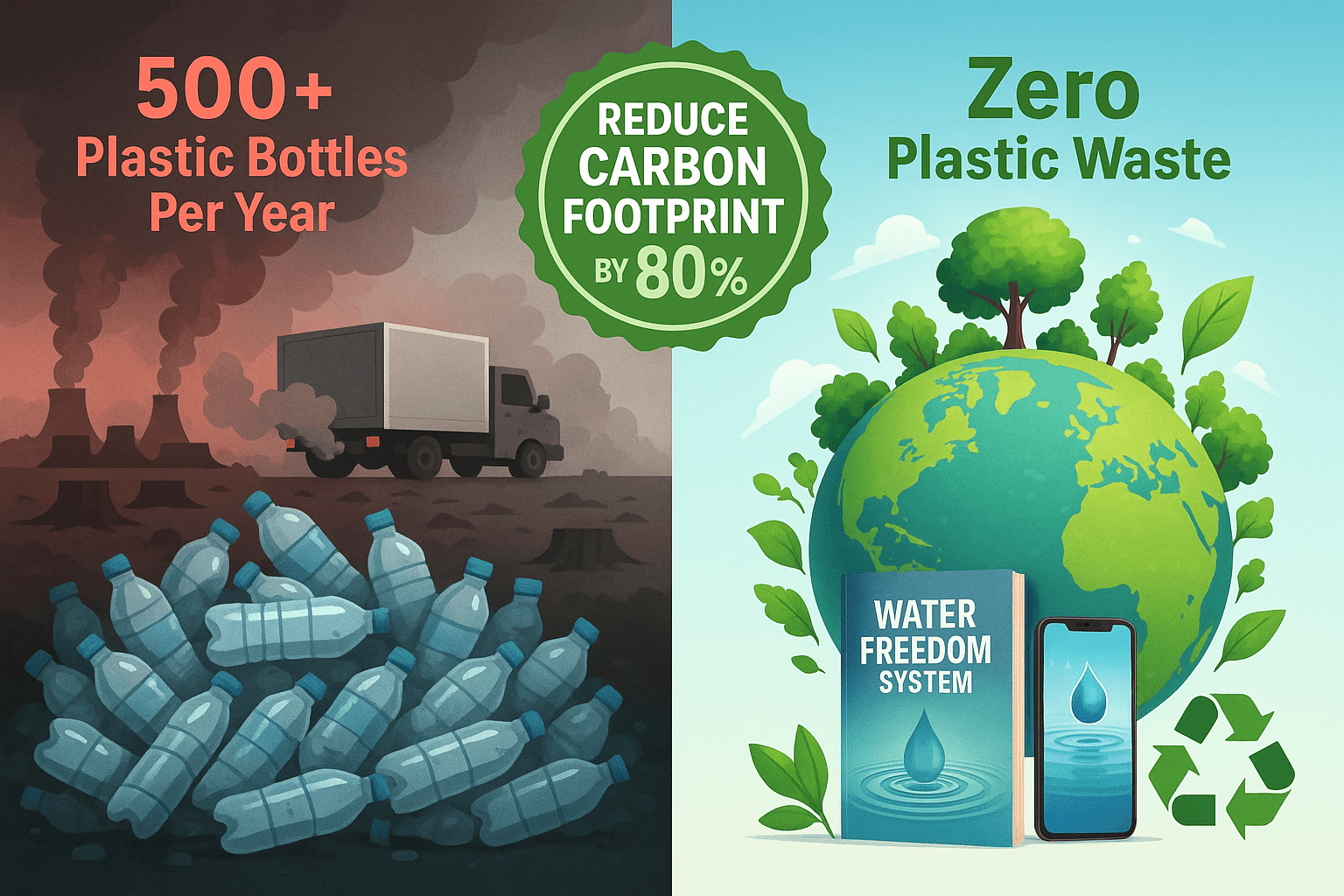
Bottled water provides convenience and does not require you to build a cooling system, but it creates recurring costs, storage requirements, transportation, and plastic waste. A DIY atmospheric system may reduce some purchases in suitable conditions, but it introduces electricity, maintenance, treatment, testing, and equipment responsibilities.
Neither option should be described as automatically risk-free. Bottled water is subject to its own packaging and storage considerations, while a DIY system depends heavily on the builder’s design and maintenance. Compare the complete lifecycle rather than focusing only on the price of the guide or the bottle.
Water Freedom System Safety Questions to Ask Before Buying
- What exact components are intended to contact the collected water?
- Are those materials suitable for the intended use?
- What contaminants does each filter target?
- What are the treatment flow rate and maintenance requirements?
- How is the reservoir cleaned and protected?
- What testing is recommended before drinking?
- Does the design use repurposed cooling or dehumidifier parts?
- What happens if power fails while water is stored?
- How often must filters, UV components, tubing, and seals be replaced?
- Are local rules relevant to the collection or treatment system?
Frequently Asked Questions About Water Freedom System Water Safety
Is water collected from air safe to drink?
Not automatically. Safety depends on collection materials, airborne contaminants, treatment, storage, maintenance, and appropriate testing.
Does condensation purify water?
Condensation changes vapor into liquid, but the water can contact equipment and storage surfaces. Condensation should not be treated as a complete purification process.
Does a carbon filter make atmospheric water safe?
Activated carbon can address certain taste, odor, and chemical concerns, but performance depends on the specific media and contaminant. It is not a universal safety guarantee.
Does UV treatment remove all contaminants?
No. UV can inactivate susceptible microorganisms under proper conditions, but it does not necessarily remove particles, metals, dissolved chemicals, taste, or odor.
Do I need to test water from a DIY AWG?
Testing can be a sensible precaution when water is intended for drinking, especially with a self-built system or repurposed components. Consult a qualified laboratory or water-quality professional about appropriate tests.
Can stored water become contaminated?
Yes. Dirty containers, open storage, heat, stagnant water, poor handling, and inadequate cleaning can affect water quality.
Is Water Freedom System certified drinking water equipment?
This article does not verify product-specific certification. Review the current seller documentation and consult qualified professionals before relying on a DIY build for drinking water.
Can I use water from the system for gardening?
Intended use should still be considered carefully. Water quality, treatment, plant sensitivity, storage, and local regulations may affect whether it is appropriate.
Is a commercial AWG automatically safer than a DIY system?
A commercial unit may have more standardized components and documentation, but safety still depends on correct installation, maintenance, treatment, and applicable verification.
Final Verdict: Treat Water Safety as Part of the Whole Project
Water Freedom System may introduce a practical DIY approach to atmospheric water generation, but the safety question cannot be answered by the condensation principle alone. The finished system must be evaluated from air intake through final storage.
The most important safeguards are suitable collection materials, appropriate treatment, clean storage, regular maintenance, and water-quality testing when the water is intended for consumption. Do not rely on clear appearance, a generic filter, a UV label, or a promotional statement as a substitute for evidence.
If you enjoy DIY projects and are willing to take responsibility for the full water path, the guide may be worth investigating. If you want a certified, integrated appliance with professional support, compare commercial options. In either case, keep another safe water source available until the system has been properly evaluated.
Water Safety Checklist Before Consumption
- Collection surfaces and tubing have been identified.
- Materials are appropriate for the intended water use.
- The reservoir and water path are clean and protected.
- Filters and sanitation components are correctly installed.
- Maintenance dates are recorded.
- Water has been evaluated by appropriate testing when necessary.
- The system is not being used as the only emergency source.
- Local professional and regulatory guidance has been considered.