Is Energy Revolution System Worth It? A Practical Buying Guide
Is Energy Revolution System Worth It? A Practical Buying Guide
If you are asking “Is Energy Revolution System worth it?”, the answer depends less on a headline promise and more on what you expect to receive. The Energy Revolution System is presented online as a digital DIY guide rather than a finished generator, so your decision should consider the purchase price, learning value, required components, additional equipment, evidence behind performance claims, your willingness to build the project, and whether a conventional energy solution would better match your needs.
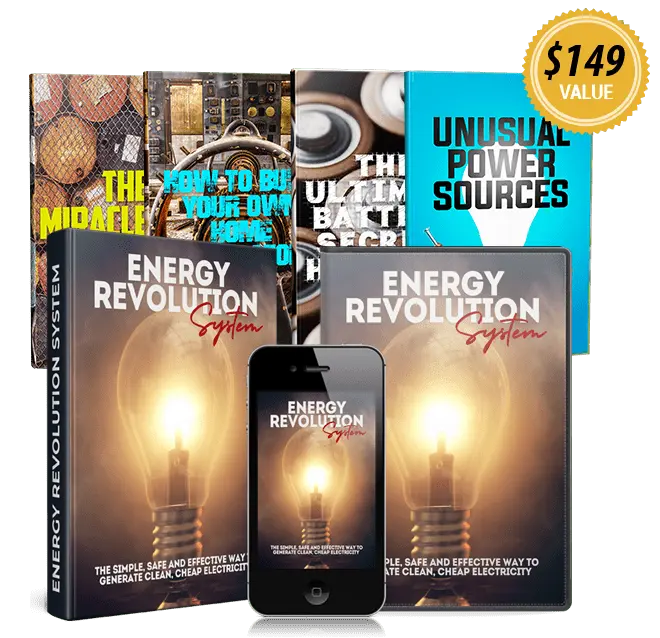
What Are You Actually Buying?
One of the most important things to understand before deciding whether the Energy Revolution System is worth it is that the product is described by seller pages as a digital guide/program. It is not presented as a boxed generator that arrives ready to connect to your home.
Public product descriptions mention digital access to instructions, diagrams, parts information and guidance for assembling the project. Some seller pages also describe components such as copper wire, magnets, coils and basic tools as part of the build requirements.
That means the advertised purchase price should not automatically be treated as the total cost of completing the project.
Energy Revolution System Cost: What Should You Budget For?
The price shown for the digital guide can vary between promotional pages and offers. Current seller pages have advertised different temporary prices, so it is better to check the actual checkout price rather than relying on an old article or screenshot.
More importantly, think about the total project budget.
| Cost Area | What You May Need | Why It Matters |
|---|---|---|
| Guide | Digital Energy Revolution System program or guide | This provides the instructional material rather than a finished physical generator. |
| Components | Wire, coils, magnets and other specified electrical/mechanical parts | The exact bill of materials depends on the version of the build and components selected. |
| Tools | Basic hand tools and potentially electrical testing equipment | Existing tools can reduce additional spending. |
| Safety Equipment | Fuses, insulated connectors, protective equipment and appropriate electrical protection | Safety should not be treated as an optional expense. |
| Storage | Battery or other energy-storage equipment if required by your intended setup | Generation and storage are separate functions. |
| Power Conditioning | Appropriate inverter, converter or regulator where required | Loads have specific voltage, current and AC/DC requirements. |
Swipe horizontally on mobile to view the complete table.
Want to See What the Guide Includes?
Before purchasing, review the current product description and confirm exactly what is included digitally and what you will need to source separately.
Explore the Energy Revolution SystemLearning Value: Is It Worth It as a DIY Project?
The learning value may be more important than the electricity itself for some buyers.
A project involving coils, wiring, magnets, measurements and electrical components can provide practical exposure to concepts such as voltage, current, resistance, electromagnetic induction, circuit connections and power measurement.
Someone who enjoys electronics and DIY experimentation may therefore evaluate the product differently from someone who simply wants inexpensive electricity with minimal effort.
Potential Learning Value
- Reading electrical diagrams
- Understanding basic circuit connections
- Working with coils and electrical components
- Using a multimeter
- Testing voltage and current
- Troubleshooting a physical build
What It Does Not Replace
- Formal electrical training
- Professional engineering design
- Electrical code knowledge
- Professional grid-connection work
- Independent laboratory verification
- Experience with high-energy battery systems
What Could You Use It For?
The sensible way to approach possible use cases is to start with the electrical load you actually want to operate.
A small educational circuit and a system intended to support household appliances are completely different requirements. Lights, phone chargers, fans, refrigerators, computers and air conditioners have different power demands and starting characteristics.
Seller pages describe the project in terms of home energy generation and supplemental power, but those promotional descriptions should not be interpreted as proof that a particular build can continuously operate any specific household appliance.
What Comes With the Energy Revolution System?
Public product descriptions indicate that the purchase is centered around digital material. Depending on the current version of the offer, the material may include instructions, diagrams, parts information and supporting educational content.
Some seller pages specifically describe the package as providing immediate digital access after purchase. The physical components are generally described separately rather than as a completed hardware kit.
Because online offers can change, check the exact checkout page before purchasing and save a copy of the product description showing what was promised at the time of your order.
What Additional Equipment Might You Need?
This is one of the biggest factors when considering whether the Energy Revolution System is worth it.
- Multimeter: useful for measuring voltage, resistance and continuity.
- Wire and connectors: the required type and rating depend on the circuit.
- Coil-related materials: depending on the particular build instructions.
- Magnets: some versions of the project describe magnets as part of the construction.
- Soldering equipment: may be required for certain connections.
- Fuses and protection: appropriate protection should be selected according to the circuit.
- Battery: necessary only if your design requires electrical storage.
- Inverter: potentially required when converting DC electricity to AC for compatible loads.
- Enclosure: useful for protecting components and preventing accidental contact.
Check the Full Project Before Buying Components
Make a list of every component and tool you already own. Then identify everything you still need before calculating the real cost of your build.
Review the Project DetailsDIY Requirements: How Much Work Is Involved?
The Energy Revolution System is not a plug-and-play appliance. The buyer should expect to spend time reading instructions, obtaining materials, assembling components and testing the resulting circuit.
Your actual difficulty level will depend on your previous experience. Someone comfortable with soldering and basic electrical measurements may find the process more approachable than someone who has never worked with circuits.
Questions to Ask Yourself
- Can I read a basic wiring diagram?
- Do I know how to use a multimeter?
- Can I identify positive and negative connections?
- Do I understand basic electrical safety?
- Am I comfortable troubleshooting a circuit?
- Do I have enough time to build and test it?
- Am I willing to stop if something becomes hot or behaves unexpectedly?
If most answers are no, the educational value may still be interesting, but you should approach the project as a learning exercise rather than as an immediate replacement for a conventional home energy system.
Claims Versus Evidence: What Should You Believe?
This is perhaps the most important part of the buying decision.
Some Energy Revolution System promotional pages make strong claims about reducing electricity costs, generating power and providing energy independence. For example, some pages advertise potential bill reductions of up to 80%. Those are marketing claims, not evidence that every buyer will achieve that result.
A seller-controlled page can establish what the seller is promising, but it does not independently establish typical performance.
| Type of Information | What It Tells You | What It Does Not Prove |
|---|---|---|
| Sales-page claim | What the seller says the product can do. | That every user will achieve the advertised result. |
| Parts list | What materials are expected for the build. | That the completed system will deliver a particular output. |
| Customer testimonial | One buyer's reported experience, if authentic and accurately presented. | Typical performance across all users. |
| Voltage/current measurement | Electrical behavior at a specific test point and load. | Long-term performance unless measured repeatedly. |
| Independent testing | Potentially stronger evidence when methodology and conditions are clearly disclosed. | Universal results under every configuration. |
Swipe horizontally on mobile to view all columns.
How Should You Evaluate Performance?
If you build the project, use measurements rather than impressions.
For example, if a load operates at 12 volts and draws 2 amps at a particular moment, the electrical power at that measurement point is approximately 24 watts:
12 V × 2 A = 24 W
That number alone does not establish how much energy the system can produce over an entire day or whether it can operate a larger appliance. Meaningful testing should record the load, voltage, current, duration and operating conditions.
If the goal is to evaluate electricity-bill savings, compare actual utility-meter data before and after the project while keeping other major changes in household electricity use in mind.
Is the 60-Day Refund Policy Important?
Multiple seller pages currently advertise a 60-day money-back guarantee for the Energy Revolution System. Some pages describe it as a full refund if the buyer is not satisfied.
However, refund terms can depend on the actual seller, payment processor and checkout terms. The safest approach is to read the refund conditions shown at checkout and save the confirmation email and policy details.
Before You Purchase
Check the current price, exact contents and refund terms on the checkout page. Keep your order confirmation and note the date your refund period begins.
Check the Current OfferWhat Are the Alternatives?
The right alternative depends on what you actually want from the project.
| Alternative | Best Matched Purpose | Key Difference |
|---|---|---|
| Solar PV | Generating electricity from sunlight | Established photovoltaic technology with measurable solar production. |
| Portable Power Station | Simple portable backup power | Preassembled battery and power electronics with less construction work. |
| Home Battery | Energy storage and backup | Stores electricity generated elsewhere or charged from the grid. |
| Small Electronics Project | Learning electrical fundamentals | Can provide a simpler starting point for beginners. |
| Energy-Efficiency Improvements | Reducing electricity consumption | Targets demand rather than building a new generation system. |
Swipe horizontally on mobile to view the complete table.
Who Is Likely to Appreciate the Energy Revolution System?
The product may be particularly interesting to people whose main objective is the DIY experience.
- DIY hobbyists who enjoy building physical projects.
- Electronics enthusiasts interested in electromagnetic concepts.
- Beginners who want structured project instructions.
- People who already own basic tools and testing equipment.
- Readers who want to experiment and measure the result themselves.
- People who understand that actual performance needs to be tested rather than assumed.
Who May Prefer a Conventional Solution?
A conventional energy product may make more sense if your main requirement is predictable, ready-to-use electricity rather than experimentation.
For example, someone who needs backup power during an outage may prefer a commercially manufactured battery power station or a professionally designed solar-and-storage system. Someone who wants to generate electricity from sunlight may prefer a conventional photovoltaic installation.
These solutions involve different costs and requirements, but they can also provide documented specifications, standardized components and established installation practices.
Energy Revolution System: Buying Checklist
- Confirm the current purchase price.
- Confirm that you are purchasing a digital guide rather than a finished physical generator.
- Review the complete list of required components.
- Estimate the cost of tools you do not already own.
- Determine whether a battery, inverter or other equipment is needed for your intended use.
- Separate seller claims from independently measured evidence.
- Decide what electrical load you actually want to support.
- Learn basic voltage, current and power measurement before testing.
- Read the current refund policy before paying.
- Compare the project with conventional alternatives.
Frequently Asked Questions
Is Energy Revolution System worth it?
It depends on what you are buying it for. Someone looking for a DIY electronics project and structured learning material may value it differently from someone looking for guaranteed household power or predictable electricity savings.
Is Energy Revolution System a physical generator?
Public seller descriptions present it primarily as a digital guide or program. The buyer generally needs to source and assemble the physical components rather than receiving a finished generator in a box.
Does the Energy Revolution System include all the parts?
Product descriptions focus on digital instructions and component guidance. Do not assume that the purchase includes every physical component, tool, battery, inverter or safety device. Confirm the exact offer before buying.
How much does the Energy Revolution System cost?
Promotional prices vary between seller pages and over time. Check the current checkout price. Also calculate the cost of the physical components and tools because the digital purchase price is not necessarily the total build cost.
Does Energy Revolution System guarantee electricity-bill savings?
Marketing pages make savings claims, including claims of reductions of up to 80% on some versions of the offer. Those figures should be treated as promotional claims rather than guaranteed results for every buyer. Actual savings require measurement of the completed system and household energy use.
Is the 60-day money-back guarantee real?
Multiple seller pages currently advertise a 60-day money-back guarantee. Because online offers and terms can change, verify the policy shown at the time of purchase and keep your transaction records.
Is the Energy Revolution System suitable for beginners?
Seller pages describe the project as beginner-friendly, but that does not mean electrical experience is unnecessary. Beginners should understand basic circuit safety, follow the instructions carefully and use appropriate measurement and protection equipment.
Can it replace a solar system?
It should not automatically be treated as a replacement for solar. Solar photovoltaic systems are designed around converting sunlight into electricity, while the Energy Revolution System is presented as a DIY electromagnetic project. They have different technologies, installation requirements and evidence standards.
Should I buy the Energy Revolution System for emergency backup?
First determine the actual wattage and runtime you need. Do not assume that a DIY project can provide whole-home backup simply because it is marketed as an energy solution. A purpose-built battery power station or professionally designed backup system may be more appropriate when predictable emergency power is the primary requirement.
What is the biggest thing to consider before buying?
Understand what you are purchasing. If you expect a finished appliance that immediately supplies household electricity, a digital DIY guide may not match that expectation. If you want a project to study, assemble and measure yourself, the product belongs to a different category.
Final Thoughts: Is Energy Revolution System Worth It?
The question “Is Energy Revolution System worth it?” cannot be answered responsibly with a universal yes or no because buyers can have very different goals.
The product is best understood as a DIY digital project rather than a conventional plug-and-play electricity system. Its potential value comes from the information, instructions and hands-on building experience. Its total cost, however, can extend beyond the guide itself because components, tools, safety equipment, testing equipment and optional power-conditioning or storage equipment may be required.
The most important caution concerns performance claims. Promotional pages make strong statements about energy savings and power generation, but those statements should be distinguished from independently verified, repeatable measurements. Your own evaluation should focus on measurable voltage, current, power, runtime and actual household energy consumption.
For a DIY enthusiast, that distinction may be perfectly acceptable because experimentation and learning are part of the appeal. For someone who simply wants dependable backup electricity or a predictable way to generate household power, a conventional solar, battery or commercially manufactured power solution may deserve closer consideration.
Make the Decision Based on Your Goal
Before purchasing, decide whether you want a hands-on learning project, supplemental experimentation, or a dependable household energy solution. Then compare the complete costs and requirements.
Review the Energy Revolution System