Energy Revolution System Pros and Cons: Complete Buyer Guide
Energy Revolution System Pros and Cons: What Buyers Should Know
The Energy Revolution System is presented as a digital DIY guide for building a small, supplemental electricity project rather than a conventional ready-to-use generator. That distinction matters when evaluating its benefits, limitations, costs, learning curve, and practical usefulness.
This guide takes a balanced look at the Energy Revolution System pros and cons so potential buyers can compare the project with more conventional energy products and decide whether its DIY approach matches their goals.
What Is the Energy Revolution System?
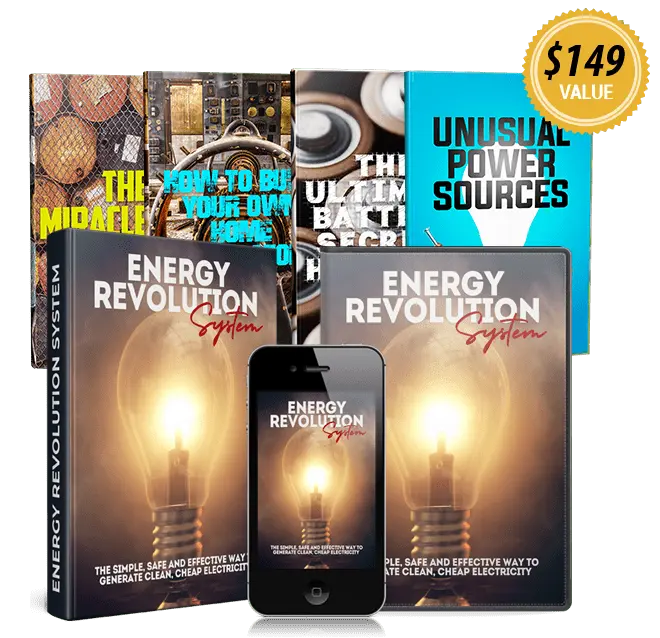
The Energy Revolution System is marketed as a downloadable educational guide containing instructions and supporting materials for a DIY electricity project. Seller materials describe it as a digital product, meaning buyers do not receive a finished generator in a shipping box. Instead, the buyer uses the instructions to source components and construct the project.
This makes the product fundamentally different from purchasing a portable power station, solar generator, gasoline generator, or professionally installed solar system.
10 Potential Advantages of the Energy Revolution System
The following advantages describe potential benefits of the product's DIY format. They should not be interpreted as guaranteed financial savings or guaranteed electrical performance.
Lower Initial Guide Cost
The purchase is primarily for digital educational material rather than a complete manufactured generator. This can make the entry price lower than purchasing a finished energy system, although hardware costs are separate.
Hands-On Learning
DIY construction can provide practical exposure to wiring, coils, electromagnetic concepts, measurement, troubleshooting, and basic electrical principles.
Potentially Accessible Components
Seller materials describe commonly available components rather than requiring buyers to purchase a proprietary finished machine. Availability and pricing will depend on your location and exact build.
No Fuel Storage for the DIY Concept
Unlike gasoline or propane generators, an electrical DIY project does not require routine storage and handling of generator fuel.
Potential Portability
A compact DIY setup can potentially be easier to move than a permanently installed home-energy system, depending on the final construction.
Opportunity for Modular Development
A DIY design can potentially be modified or expanded as the builder learns more. However, every modification needs to remain electrically appropriate and safe.
Useful as an Educational Project
People interested in electronics, electromagnetic induction, energy systems, or practical experimentation may value the learning experience independently of the eventual electricity savings.
Potential Supplemental Use
A correctly constructed small system may be considered for supplemental, low-demand applications rather than as a replacement for an entire utility connection.
Digital Access
Because the product is digital, buyers can generally access the educational material without waiting for a physical generator to be manufactured or shipped.
Refund Window May Reduce Guide-Purchase Risk
Seller pages advertise a 60-day money-back guarantee. Buyers should review the actual terms shown at checkout and understand that separately purchased hardware is a different expense.
Interested in the DIY Approach?
Review exactly what the digital guide includes, what you must source yourself, and whether the project matches your technical comfort level before purchasing.
Explore the Energy Revolution System10 Potential Drawbacks of the Energy Revolution System
The disadvantages are especially important because this is a DIY-oriented product. Someone looking for instant, certified, plug-and-play backup power may have very different requirements from someone who enjoys building electronics projects.
It Requires DIY Assembly
Buyers must build the physical system themselves. That introduces more responsibility than purchasing a finished power station.
Component Costs Are Separate
The price of the digital guide does not automatically represent the total project cost. Wire, magnets, connectors, hardware, electrical components, measuring equipment, and other parts may add to the budget.
There Is a Learning Curve
A beginner may need time to understand diagrams, wiring, polarity, measurements, component specifications, and troubleshooting.
Performance Can Vary
Output is affected by construction quality, component selection, configuration, connected loads, and testing conditions. A guide cannot guarantee identical results for every builder.
It Is Not Automatically Whole-Home Backup
A small DIY energy project should not automatically be treated as equivalent to a professionally sized whole-home backup system.
Safety Responsibility Falls on the Builder
Incorrect wiring, insulation, grounding, component selection, or connections can create electrical hazards. Safe construction and testing are essential.
Troubleshooting May Take Time
If the finished project does not perform as expected, identifying the cause can require additional measurements and experimentation.
Scalability Has Practical Limits
Increasing the number of components or modules is not automatically the same as increasing useful output safely. Larger systems require appropriate electrical design and protection.
Not the Same as a Certified Commercial Product
A DIY build should not be assumed to have the same testing, certification, enclosure standards, warranties, or manufacturer support as commercial power equipment.
Marketing Claims Need Careful Interpretation
Online pages can present ambitious savings or performance scenarios. Buyers should distinguish promotional claims from independently measured results and consider their own electricity usage.
Energy Revolution System Cost Considerations
One of the easiest mistakes when evaluating a DIY energy guide is to compare only the advertised guide price with the price of a finished generator. A more useful calculation includes the entire project.
| Cost Category | What to Consider | Why It Matters |
|---|---|---|
| Digital guide | Purchase price shown at checkout | This is only the starting point for a DIY project. |
| Coils / wire | Type, gauge, length and quantity | Component specifications can affect both cost and construction. |
| Magnets | Size, type and quantity | Specialized components may cost more than ordinary hardware. |
| Electrical components | Connectors, regulators, inverter-related components and protection | These can add significantly to the total project budget. |
| Tools | Wire tools, meters, cutters and other equipment | Existing tools can reduce the project cost. |
| Safety equipment | Insulation, protective equipment and appropriate test equipment | Safety should not be treated as an optional expense. |
| Future upgrades | Additional components or storage | Trying to scale later can increase the total cost. |
DIY Difficulty: How Hard Is It?
The difficulty depends heavily on your existing experience. A person who already understands basic wiring and electronics may move through the instructions more comfortably than someone who has never used a multimeter or worked with electrical components.
| Experience Level | Likely Experience | What to Prepare For |
|---|---|---|
| Complete beginner | Higher learning curve | Learn terminology, diagrams, tools and safe testing. |
| Basic DIY experience | Moderate learning curve | Careful wiring and following instructions precisely. |
| Electronics hobbyist | More familiar workflow | Component specifications and measurement remain important. |
| Professional electrician | Electrical concepts may be familiar | Still evaluate the specific design, protection and local requirements. |
Component Costs: What Can Add Up?
The final hardware budget can vary because components are sourced separately. Seller materials describe the project as using commonly available components, but the exact price depends on where you live, what quality you select, and whether you already own suitable tools.
It is also worth remembering that cheaper components are not automatically the best choice. Electrical specifications, insulation, current ratings, heat management, connectors, and physical construction all matter.
Calculate Your Full DIY Budget First
Before buying, make a component checklist and estimate the guide, hardware, tools and safety equipment together.
Review the Guide & MaterialsSafety: One of the Most Important Considerations
Electricity can cause shock, burns, fires, equipment damage, or other hazards when systems are incorrectly assembled. The DIY nature of this project means safety cannot be delegated to a manufacturer in the same way it can with some commercial equipment.
- Follow the supplied safety instructions carefully.
- Use components with appropriate electrical ratings.
- Inspect insulation and connections before applying power.
- Use suitable electrical measurement equipment.
- Do not bypass fuses, protection devices, or safety procedures.
- Keep conductive parts protected from accidental contact.
- Do not connect a DIY system directly to household wiring unless the setup is designed, approved, and installed according to applicable electrical requirements.
- When in doubt, ask a qualified electrician to inspect the installation.
Expected Learning Curve
The learning curve is an important part of the Energy Revolution System pros and cons discussion. The same feature that makes a DIY project attractive to a hobbyist can make it inconvenient for someone who simply wants electricity immediately.
Beginners may need to understand basic concepts such as voltage, current, resistance, polarity, continuity, insulation, connections, and load requirements. The educational value can therefore be meaningful, but it also means the project requires attention and patience.
Scalability: Can the System Grow?
DIY systems can sometimes be designed in modules, allowing builders to experiment with different configurations or additional components. However, scalability should not be interpreted as an unlimited ability to increase electrical output.
Every increase in capacity introduces additional questions about wiring, protection, heat, component ratings, storage, enclosure design, and load management.
| Scaling Goal | What Changes | Main Consideration |
|---|---|---|
| More small loads | Load management and output capacity | Stay within component ratings. |
| Longer runtime | Storage or energy-management requirements | Storage adds cost and complexity. |
| Higher power demand | Larger electrical components | Protection, heat and wiring become increasingly important. |
| Whole-home application | Major system redesign | Professional engineering and code-compliant installation may be required. |
Portability Considerations
A compact DIY setup can potentially be moved between locations more easily than permanently installed solar panels or a home battery system. This may appeal to people who live in smaller spaces, use workshops, or want an experimental setup.
However, portability depends on the final build. Batteries, enclosures, inverters, mounting hardware, and additional components can increase both weight and size.
Reliability: What Should You Expect?
Reliability should be evaluated differently for a DIY build and a commercial generator. With a commercial product, the manufacturer normally specifies operating limits and provides a defined hardware package. With a DIY system, construction quality becomes part of the reliability equation.
Connections can loosen, components can fail, wiring can be damaged, and improper assembly can affect performance. Regular inspection and appropriate testing are therefore important.
Energy Revolution System vs Conventional Energy Products
The most useful comparison is not simply “DIY versus traditional.” Different products solve different problems.
| Feature | Energy Revolution System | Portable Power Station | Gas Generator | Home Solar + Battery |
|---|---|---|---|---|
| Format | Digital DIY guide + self-sourced hardware | Finished commercial hardware | Finished commercial hardware | Installed energy system |
| DIY required | Yes | Usually minimal | Usually minimal | Usually professional installation |
| Learning value | High for DIY learners | Lower | Lower | Moderate to high |
| Fuel required | Depends on the final electrical design | No gasoline fuel | Yes | No conventional generator fuel |
| Portability | Potentially portable | Generally portable | Portable, but often heavier/noisier | Generally fixed |
| Installation complexity | DIY construction | Low | Low to moderate | High |
| Output predictability | Depends on the finished build | Manufacturer-rated | Manufacturer-rated | System-designed and rated |
| Whole-home suitability | Not something to assume | Depends on model and electrical setup | Depends on generator size and installation | Can be designed for whole-home use |
Who May Find the Energy Revolution System Relevant?
The product may be relevant to a particular type of buyer rather than everyone. The following profiles can help clarify the fit.
It May Be Relevant If You:
- Enjoy hands-on electronics or DIY projects.
- Want to learn more about electromagnetic and electrical principles.
- Are comfortable sourcing components yourself.
- Have time to build and test a project rather than expecting immediate use.
- Understand that performance depends on construction and operating conditions.
- Want to experiment with a supplemental energy concept.
- Are willing to use appropriate safety procedures.
It May Be a Poor Fit If You:
- Want a finished generator that works immediately out of the box.
- Do not want to source or assemble components.
- Need guaranteed power for critical appliances.
- Expect the project to replace your utility connection automatically.
- Are uncomfortable working with electrical components.
- Have no interest in learning or troubleshooting a DIY project.
Want to See What You Actually Receive?
Check the current product information and review the digital-guide format before deciding whether a DIY energy project fits your needs.
View Energy Revolution SystemWhat About the Money-Back Guarantee?
Seller pages currently advertise a 60-day money-back guarantee for the digital product. Because refund terms can change, buyers should read the terms presented at the time of purchase and keep their order information.
It is also important to distinguish the cost of the digital guide from the cost of physical components. Even if a refund is available for the digital product, separately purchased hardware may be subject to different return policies.

Questions to Ask Before Buying
- Is this a digital guide or a finished physical generator?
- What exactly is included with the purchase?
- Which components must I buy separately?
- What is my estimated total hardware budget?
- What tools do I already have?
- What electrical skills will I need?
- What loads do I actually want to power?
- Do I need portable power or permanent home backup?
- What safety requirements apply where I live?
- Does the refund policy cover the guide only, or any physical components?
- Are performance claims independently measured or simply promotional examples?
- Can I verify output using appropriate electrical measuring equipment?
Energy Revolution System Pros and Cons at a Glance
| Area | Potential Advantage | Potential Concern |
|---|---|---|
| Price | Digital guide can have a lower entry cost | Hardware costs are additional |
| DIY | Hands-on learning | Requires time and effort |
| Components | Potentially accessible parts | Quality and compatibility matter |
| Safety | Can be designed carefully | Builder is responsible for safe construction |
| Learning curve | Educational value | Beginners may need extra time |
| Scalability | Potential for modular experimentation | More capacity means more complexity |
| Portability | Potentially compact | Final weight depends on components |
| Reliability | Can be maintained by the builder | Depends heavily on construction quality |
| Backup power | May support selected low-demand applications | Should not automatically be treated as whole-home backup |
| Guarantee | Seller advertises a 60-day refund period | Review current terms and distinguish guide cost from hardware cost |
Frequently Asked Questions
1. Is the Energy Revolution System a physical generator?
No. Seller materials describe it as a digital educational guide. Buyers use the instructions and source the physical components separately.
2. Is the Energy Revolution System suitable for beginners?
It is marketed toward beginners, but beginner-friendly instructions do not remove the need to understand basic electrical safety, follow diagrams carefully, and use suitable tools and measurements.
3. How much do the components cost?
There is no single universal hardware cost because components, suppliers, specifications and local prices vary. Build a complete parts list before setting your budget.
4. Can it replace my home's electricity?
You should not assume that a DIY system will replace an entire household utility supply. The appropriate capacity depends on the actual electrical loads and system design.
5. Is the system portable?
The final build can potentially be portable, but portability depends on the enclosure, wiring, storage, inverter-related equipment, and other components included in the finished system.
6. Does scaling automatically mean more power?
No. Adding components does not automatically guarantee a proportional increase in usable output. Electrical design, ratings, protection, heat management and load requirements must all be considered.
7. What is the biggest consideration for a first-time buyer?
Understand that you are purchasing educational instructions for a DIY project, not simply ordering a finished appliance. Your total cost, effort and final performance depend on the build.
8. Does the Energy Revolution System have a refund policy?
Seller pages advertise a 60-day money-back guarantee for the digital product. Always check the current refund terms before purchasing, including what happens to separately purchased components.
Final Thoughts on the Energy Revolution System Pros and Cons
The Energy Revolution System is best understood through the lens of what it actually asks the buyer to do. It is a DIY educational project, so its appeal can come from learning, experimentation, customization, and the possibility of creating a supplemental electrical setup rather than simply purchasing another finished appliance.
At the same time, the DIY format creates responsibilities. You need to purchase components, understand the instructions, assemble the system carefully, test it, manage safety, and evaluate the finished output realistically.
For a technically curious homeowner, electronics hobbyist, hands-on learner, or DIY enthusiast, those characteristics may make the project relevant. Someone who wants immediate, predictable and professionally certified backup electricity may instead need to compare it with commercially manufactured power stations, generators, batteries, or professionally installed energy systems.
Ultimately, the most useful way to evaluate the Energy Revolution System is to compare the complete cost, required effort, expected electrical loads, safety requirements, portability needs and reliability expectations with the alternatives available to you.
Ready to Investigate the DIY Energy Approach?
Review the current Energy Revolution System information, confirm what is included, estimate your component costs, and decide whether the project fits your own energy goals and technical experience.
Check the Energy Revolution SystemBuyer note: Product descriptions, guarantees and promotional claims can change. Verify current pricing, inclusions, refund conditions and technical requirements on the sales page before purchasing. For electrical work involving household wiring or utility connections, follow applicable local codes and consult a qualified professional where appropriate.