Energy Revolution System for Beginners: Everything You Need to Know
Energy Revolution System for Beginners: Everything You Need to Know
If you are discovering the Energy Revolution System for the first time, the most important thing to understand is what you are actually buying, what you would need to build yourself, and how to evaluate the finished project realistically.
What Is the Energy Revolution System?
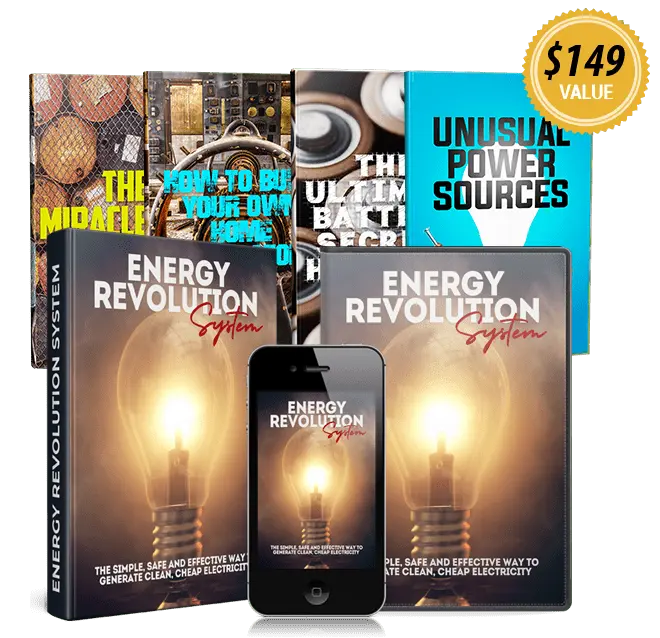
The Energy Revolution System is presented by sellers as a digital, DIY-oriented energy project. Current seller descriptions say the package includes instructional material, diagrams or blueprints, materials lists, and guidance intended to help a user construct a small electrical system from separately sourced components.
Some seller pages describe components such as coils, magnets, wires, capacitors, diodes, switches, fuses, and related electrical hardware. Exact components can vary between versions or seller pages, so a beginner should always check the actual materials list supplied with the purchase rather than assuming every online description is identical.
The underlying concepts discussed in these materials include electricity, magnetism, coils, and electromagnetic induction. These are established areas of electrical science. However, a particular DIY design should be evaluated on its measured input, output, efficiency, and operating conditions rather than on marketing descriptions alone.
What the Energy Revolution System Is Not
Understanding what the product is not can prevent unrealistic expectations. A first-time visitor should distinguish a digital DIY guide from a manufactured energy appliance.
Not a Ready-Made Generator
The product is sold as digital instructional material. You should not assume that a completed physical generator will arrive at your door.
Not Free Energy
A coil, magnet, capacitor, or circuit does not eliminate the need to account for energy input and losses. Measure the system rather than assuming that electricity appears without an energy source.
Not Automatically Whole-Home Power
A small DIY electrical project should not automatically be treated as equivalent to a professionally sized residential backup system.
Not a Substitute for Electrical Codes
Instructions from an online guide do not replace local electrical requirements, appropriate protection, or professional inspection where those are required.
Want to See the Guide Before Starting?
Review the current product information and confirm exactly what is included before purchasing or collecting components.
Explore the Energy Revolution SystemBasic Electricity Concepts Every Beginner Should Know
You do not necessarily need an engineering degree to understand a small electrical project. However, learning a few fundamental concepts before touching the hardware can make the build considerably easier and safer.
| Concept | Simple Explanation | Practical Example |
|---|---|---|
| Voltage (V) | The electrical potential difference that drives current through a circuit. | A 12V battery has a nominal voltage of 12 volts. |
| Current (A) | The rate at which electric charge flows. | A device drawing 2 amps is using more current than one drawing 0.5 amps at the same voltage. |
| Resistance (Ω) | Opposition to current flow. | Wire and electrical components have resistance that can produce heat. |
| Power (W) | The rate at which electrical energy is transferred. | A 10W LED light uses less electrical power than a 1,000W heater. |
| Energy (Wh / kWh) | The amount of electrical energy used or stored over time. | A 100W device running for 5 hours consumes 500Wh. |
| DC | Direct current, where current flows in a consistent direction. | Batteries provide DC electricity. |
| AC | Alternating current, where current periodically changes direction. | Household outlets normally provide AC electricity. |
| Load | The device or equipment consuming electrical power. | A fan, lamp, laptop charger, or refrigerator is a load. |
A Simple Power Example
A useful relationship for beginners is:
For example, a 12-volt circuit drawing 2 amps is transferring approximately 24 watts of electrical power at that point in the circuit.
This simple calculation becomes useful when deciding whether a project can support a particular load. A phone charger and an electric heater are not comparable loads: the heater can require hundreds or thousands of watts.
How Coils and Electromagnetic Induction Fit In
One of the concepts commonly discussed in Energy Revolution System materials is electromagnetic induction.
In simple terms, changing magnetic fields can induce an electrical voltage in a conductor. This principle is fundamental to technologies such as transformers, generators, and many electrical machines.
A coil is simply wire arranged into loops. Changing magnetic conditions around that coil can affect the voltage induced across it. The number of turns, wire characteristics, magnetic field, frequency, resistance, and circuit configuration can all influence what happens.
What Tools Might a Beginner Need?
The exact requirements should come from the current guide and parts list. However, seller descriptions commonly mention basic workshop and electrical tools.
| Tool | Possible Purpose | Beginner Note |
|---|---|---|
| Digital multimeter | Measure voltage, resistance and continuity; some meters also measure current. | Learn the correct measurement mode before connecting probes. |
| Wire cutters | Cut electrical wire. | Use tools appropriate for the wire size. |
| Wire strippers | Remove insulation without unnecessarily damaging conductors. | Practice on spare wire first. |
| Screwdrivers | Secure terminals and hardware. | Use insulated tools where appropriate. |
| Pliers | Grip, bend and position wires or hardware. | Avoid using unsuitable pliers as cutting tools. |
| Soldering equipment | Join certain electrical connections where required. | Requires heat and ventilation awareness. |
| Insulation materials | Protect electrical connections. | Use materials suitable for the electrical conditions. |
| Safety equipment | Protect eyes, hands and workspace. | Safety equipment should be selected for the specific task. |
What Components Might Be Involved?
Online descriptions of the Energy Revolution System mention components such as copper wire, coils, magnets and other electrical parts. Some versions also describe capacitors, diodes, switches, fuses, terminals, grounding connections, and an enclosure.
The exact specification matters more than the component name. For example, saying "copper wire" does not tell you the correct wire gauge, insulation rating, length, or current capacity.
| Component Category | What It Does | What Beginners Should Check |
|---|---|---|
| Coil / wire | Provides the conductive winding used in the electrical design. | Wire gauge, insulation, number of turns and connection layout. |
| Magnets | Provide magnetic fields in designs that use magnetic interaction. | Type, size, orientation and safe handling. |
| Capacitor | Stores electrical energy temporarily and influences circuit behavior. | Capacitance, voltage rating and polarity where applicable. |
| Diodes / rectifier | Can control the direction of current and convert certain AC outputs to DC. | Current and voltage ratings and correct orientation. |
| Fuse / protection | Provides protection against excessive current in appropriate circuits. | Correct rating and placement. |
| Switch / terminals | Provides control and connection points. | Current and voltage ratings. |
| Enclosure | Helps protect people and components from accidental contact. | Ventilation, insulation, physical strength and accessibility. |
Before You Buy Components
Do not build your shopping list from a generic online article. Use the exact current materials list for the version of the guide you purchase.
Review the GuideWhat Skill Level Is Required?
The product is marketed as beginner-friendly, but "beginner-friendly" does not mean "no learning required." You should be comfortable reading simple diagrams, following instructions carefully, identifying electrical components, and using a multimeter safely before attempting the project.
| Experience | Likely Challenge | Recommended Preparation |
|---|---|---|
| Complete beginner | Understanding electrical terminology and measurements. | Learn voltage, current, resistance, polarity and multimeter basics first. |
| Basic DIY experience | Following electrical diagrams accurately. | Practice identifying components and making secure connections. |
| Electronics hobbyist | Verifying specifications and troubleshooting. | Use measurements rather than assumptions about output. |
| Experienced electrician | Evaluating the particular design and intended application. | Check ratings, protection, grounding and local requirements. |
How Difficult Is the Project?
A useful way to think about project difficulty is to divide it into stages. The physical assembly may not be the hardest part. Understanding the electrical connections and safely verifying the finished circuit can require more attention.
Planning
Read the entire guide, identify components, understand the circuit and prepare a safe workspace before beginning.
Component Preparation
Check that parts match the required specifications and inspect them for damage before assembly.
Assembly
Build coils and connect the electrical components according to the instructions and diagrams.
Testing
Verify continuity, polarity, voltage and other relevant measurements before connecting useful loads.
Safety: The Most Important Beginner Lesson
Electrical projects should be approached with respect. Even relatively small circuits can cause burns, sparks, component damage, or electrical shock if incorrectly assembled or tested.
- Read the complete instructions before starting.
- Work on a clean, dry and organized surface.
- Inspect wires and insulation before applying power.
- Use components with appropriate voltage and current ratings.
- Use suitable fuses and protection where required by the design.
- Never assume a wire is safe simply because it looks thin or low-power.
- Never work on an energized circuit when the procedure does not require it.
- Learn how your multimeter works before measuring a live circuit.
- Keep magnets and electrical components away from anything they could damage.
- Use appropriate ventilation and eye protection when soldering.
- Do not connect a DIY system to household wiring without appropriate professional assessment and code-compliant equipment.
- If you are unsure about an electrical connection, stop and ask a qualified professional.
Common Beginner Mistakes
Many problems in DIY electrical projects are not caused by complicated physics. They come from small practical mistakes.
| Common Mistake | Why It Causes Problems | Better Approach |
|---|---|---|
| Starting before reading the full guide | You may misunderstand later steps or required components. | Read the complete instructions first. |
| Buying substitute components without checking ratings | Parts that look similar may behave differently. | Match electrical specifications, not just appearance. |
| Reversing polarity | Some components can be damaged or behave incorrectly. | Mark positive and negative connections clearly. |
| Loose connections | They can create resistance, heat, intermittent operation or sparks. | Inspect and secure every connection. |
| Skipping measurements | You cannot know what the circuit is actually producing. | Measure before connecting valuable equipment. |
| Testing with a large appliance immediately | A large load can exceed the project's available output. | Begin with an appropriate low-power test load. |
| Ignoring heat | Excessive heat can indicate losses, overload or poor connections. | Monitor components and stop if abnormal heating occurs. |
| Assuming a voltage reading equals useful power | Voltage alone does not tell you how much usable power is available. | Measure voltage and current under a defined load. |
How to Evaluate Performance Properly
This is one of the most important sections for a beginner. Seeing a voltage on a multimeter does not automatically mean that a system can provide substantial usable electricity.
1. Measure Voltage
Record the voltage under a clearly defined test condition. Note whether the reading is open-circuit or measured while a load is connected.
2. Measure Current
Current tells you how much electrical flow is occurring. It should be measured using the correct method and meter setting because incorrectly measuring current can create a short circuit.
3. Calculate Electrical Power
P = V × I
Example: 12 volts × 2 amps = approximately 24 watts.
4. Test Under a Realistic Load
A system can show a voltage with almost no load and then experience a large voltage drop when a device is connected. Testing under a defined load gives a more useful picture.
5. Measure Runtime
If energy storage is involved, record how long the system can operate a defined load before reaching its safe operating limit.
6. Compare Input and Output
If the project requires an external electrical input, measure the input as well as the output. This helps you evaluate efficiency rather than looking only at the output number.
A Simple Beginner Performance Test
Imagine your project produces approximately 12 volts under a defined load and the current is 1 amp.
| Measurement | Example Reading | What It Tells You |
|---|---|---|
| Voltage | 12V | The electrical potential measured at the test point. |
| Current | 1A | The current flowing through the defined load. |
| Calculated power | 12W | Approximate electrical power under that test condition. |
| Runtime | Measured separately | Shows how long the system can support the selected load. |
This example is only an illustration of measurement technique. It is not a claim about the output of the Energy Revolution System.
How Does It Compare With Solar Power?
Solar and the Energy Revolution System represent different approaches. Residential solar panels convert sunlight into electrical energy, while the Energy Revolution System is marketed around a DIY electrical design involving coils, magnets and related components.
| Factor | Energy Revolution System | Residential Solar |
|---|---|---|
| Primary format | DIY guide and self-built project | Installed photovoltaic system |
| Energy source | Depends on the actual electrical design and input | Sunlight |
| Hands-on involvement | High | Usually low after installation |
| Portability | Potentially portable depending on build | Generally fixed |
| Weather dependence | Depends on the design | Solar production depends on sunlight |
| Installation | DIY-oriented | Usually professional for residential systems |
| Backup during outage | Depends on actual design and output | Usually requires compatible backup equipment and storage |
How Does It Compare With a Battery System?
A battery system primarily stores electrical energy for later use. It does not necessarily generate that energy itself. A battery can be charged from the grid, solar panels, or another suitable source.
This distinction is useful because many beginners use the terms "generator" and "battery backup" interchangeably even though they perform different functions.
| Factor | DIY Energy Project | Battery Backup System |
|---|---|---|
| Main function | Electrical project / generation concept | Energy storage and backup |
| Construction | Built by user | Usually manufactured and installed |
| Learning value | High | Moderate |
| Portability | Depends on design | Fixed residential systems are generally low-portability |
| Energy source | Depends on design | Requires an external charging source |
| Backup predictability | Depends on measured system performance | Specified by battery capacity and system design |
Compare the DIY Concept With Conventional Backup
Before starting a build, decide whether you need a learning project, portable electricity, stored backup power, or a professionally designed home energy system.
Learn More About the Energy Revolution SystemHow Much Does a Beginner Project Cost?
Avoid treating the advertised price of a digital guide as the total cost of building the project. The complete budget can include the guide, components, tools, measuring equipment, safety equipment, enclosure materials, replacement parts, and any upgrades.
| Expense | Why You May Need It | How to Budget |
|---|---|---|
| Digital guide | Provides instructions and project information. | Use the current price shown at checkout. |
| Electrical components | Required to construct the specific circuit. | Use the exact current parts list. |
| Tools | Needed for assembly and testing. | Subtract tools you already own, but budget for missing essentials. |
| Safety equipment | Protects the builder and workspace. | Do not eliminate safety items to reduce cost. |
| Replacement parts | Useful if components are damaged during learning or testing. | Keep a small contingency budget. |
What Should a Beginner Do Before Buying?
- Identify your actual goal. Decide whether you want to learn, experiment, create supplemental power, or obtain dependable emergency backup.
- List the loads you want to operate. Write down the wattage of each device and how long you expect to use it.
- Read the product description carefully. Confirm that you are purchasing digital instructions rather than a completed physical generator.
- Review the complete parts list. Determine which components you must purchase separately.
- Check your skill level. If you have never used a multimeter or worked with electrical wiring, learn the basics before beginning.
- Prepare a safe workspace. Keep the project away from children, moisture and unnecessary conductive objects.
- Understand local electrical requirements. Permanent wiring and grid-connected equipment can be subject to local regulations.
Common Questions About Purchasing the Energy Revolution System
Is the Energy Revolution System a physical product?
Seller pages describe it as a digital program or guide. That means the buyer should expect digital instructions rather than a finished generator being shipped as a physical appliance.
Does a beginner need electrical engineering knowledge?
The product is marketed as beginner-friendly, but a first-time builder should still understand basic electrical concepts and safe measurement practices before assembling hardware.
What tools might I need?
Depending on the exact build, basic tools can include a multimeter, screwdrivers, pliers, wire cutters, wire strippers and potentially soldering equipment. Confirm the exact list in the current guide.
What components are involved?
Online seller descriptions mention components such as copper wire, coils, magnets and basic electrical components. Some descriptions also mention capacitors, diodes, switches, fuses and an enclosure. Always follow the exact current materials list.
Can I use it to power my entire house?
You should not assume that. Household electricity requirements can be substantial, and whole-home backup requires appropriately rated equipment, protection and installation. Evaluate actual measured output and load requirements before considering any larger application.
How do I know whether the project is working?
Measure it. Check voltage, current and power under a defined load and record the results. If energy storage is involved, also measure runtime and recharge behavior.
Can I connect the system directly to my home's electrical wiring?
Do not do this unless the system has been specifically designed for that application and the connection complies with applicable electrical requirements. A qualified electrician should be involved where required.
How does it compare with solar?
Solar panels use sunlight to generate electricity. The Energy Revolution System is marketed as a DIY electrical project based around coils, magnets and related circuitry. They are different technologies and should be compared according to the energy source, required output, installation, cost and intended use.
How does it compare with a battery backup?
A battery backup primarily stores electricity for later use. A DIY energy project has a different purpose and configuration. A battery may also be used alongside solar or another generation source.
Is there a money-back guarantee?
Several seller pages currently advertise a 60-day money-back guarantee, but terms can vary between sales pages. Check the exact refund conditions displayed when you purchase and retain your order information.

Beginner Checklist Before You Start
- ☐ I have read the complete instructions.
- ☐ I understand the basic circuit diagram.
- ☐ I have checked every component specification.
- ☐ I know which connections are positive and negative where applicable.
- ☐ I have inspected wires and insulation.
- ☐ I have appropriate electrical protection.
- ☐ I know how to use my multimeter correctly.
- ☐ I have a safe and dry workspace.
- ☐ I will test before connecting valuable equipment.
- ☐ I will record voltage, current and load conditions.
- ☐ I will not connect an unverified DIY system to household wiring.
- ☐ I know when to stop and ask a qualified professional.
Ready to Investigate the Beginner Guide?
Review the current Energy Revolution System information, check what is included, and make sure the DIY format matches your expectations before you begin.
Check the Energy Revolution SystemFinal Thoughts: Is the Energy Revolution System Suitable for a Beginner?
The Energy Revolution System can be approached as a structured DIY learning project for someone interested in electricity, coils, magnets, circuits, measurements, and hands-on construction. Its beginner-oriented presentation can make the subject more approachable, but the physical project still requires careful assembly and safe electrical practices.
The most important expectation to set is that buying a digital guide is not the same as buying a certified, ready-to-use generator. You still need to source components, understand the circuit, construct the hardware, test the result, and determine what the finished system can actually do.
If your main goal is dependable whole-home backup, compare the project with professionally sized battery systems, solar-plus-storage installations, portable power stations, and conventional generators. If your goal is learning and experimentation, the DIY format may be more relevant.
Explore Before You Build
If you are comfortable with the DIY approach, review the current guide, materials requirements, refund terms and safety information before purchasing or beginning assembly.
Explore Energy Revolution SystemImportant buyer note: Product descriptions, pricing, guarantees and component lists can change. Verify current details from the seller before purchasing. The explanations above are intended for general education and should not replace applicable electrical codes, manufacturer instructions, or professional electrical advice.