Energy Revolution System Buying Guide: Cost, Features, Benefits & Alternatives
Energy Revolution System Buying Guide: Cost, Features, Claims, Benefits and Alternatives
Thinking about buying the Energy Revolution System? This comprehensive buying guide helps you evaluate the product's advertised features, understand the science behind its DIY energy concept, investigate the price and additional expenses, assess customer testimonials, compare alternatives and prepare for the purchase and refund process.
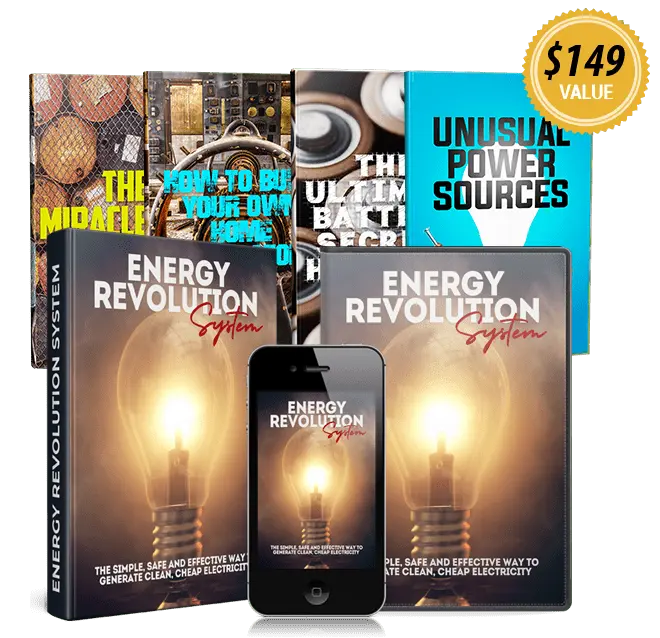
The Energy Revolution System is marketed as a DIY energy-related guide or blueprint associated with electrical experimentation and home energy concepts. Before buying, it is important to establish what the particular offer actually provides, what you may need to purchase separately, and whether its claims about practical electricity generation or savings are supported by reliable evidence. This guide follows the complete customer journey—from awareness and research to verification, price comparison, safety, purchase expectations and refunds—so you can make a more informed decision without relying on hype.
Start With the Current Product Information
Review the offer description, package contents and purchase terms before deciding whether the Energy Revolution System fits your goals.
View Energy Revolution SystemAffiliate disclosure: This article contains a promotional affiliate link. A commission may be earned if you purchase through it, at no additional cost to you.
1. Awareness: What Is the Energy Revolution System?
The Energy Revolution System is promoted as a DIY energy guide or blueprint. Its marketing connects the project with concepts such as electrical coils, magnets, electromagnetic principles and the possibility of exploring home energy generation.
The exact offer matters. Product pages using similar names may differ in their seller information, package contents, pricing and stated terms. Some descriptions present a digital guide rather than a complete physical generator shipped ready to use.
For that reason, do not assume that purchasing the Energy Revolution System automatically provides a finished machine, every component needed for construction, or a system suitable for powering household appliances. Verify the specific offer you intend to buy.
What are you actually purchasing?
Digital instructions
A guide or blueprint may explain a project, list components or describe a proposed construction process. The exact contents should be confirmed with the seller.
Physical components
Wire, magnets, tools, meters, enclosures and protective components may need to be sourced separately if they are not explicitly included.
Completed equipment
A finished generator or certified power system is a different purchase from instructions explaining how to build or investigate a project.
Technical support
Support, updates, live assistance or troubleshooting may or may not be included. Check the written package description rather than assuming these services are available.
Who might consider this type of product?
A DIY energy guide may interest people who enjoy electronics, want to learn about electromagnetic principles or prefer structured instructions for an experimental project. Its value for those purposes depends on the accuracy, clarity and safety of the material supplied.
People looking for guaranteed electricity-bill reductions, dependable emergency power or a ready-to-connect household generator need a different level of evidence. They should verify actual performance specifications and compare the offer against established equipment designed for those purposes.
2. Research: How Does the Energy Revolution System Work?
There are two separate questions to investigate: how the product is delivered and how the electrical project it describes is supposed to function.
How a guide-based product works
If the offer is for digital instructions, the purchase provides access to educational material. The buyer then reviews the instructions, checks the parts list, obtains any required materials and decides whether the project can be completed safely.
The instructions themselves should explain the purpose of the components, the electrical connections, the energy source and the appropriate testing process. If the seller does not clearly identify these elements, it becomes more difficult to judge the design before purchasing.
The science behind conventional electrical generators
Many generators use electromagnetic induction. When the magnetic flux through a conductor changes, a voltage can be induced. If the circuit is connected to a load, that voltage may drive current through it.
In a conventional generator, mechanical energy supplied by a source such as wind, flowing water or an engine is converted into electrical energy. Some of the input energy is lost through resistance, friction, heat and other inefficiencies.
Coils and magnets are important parts of many electromagnetic devices, but their presence does not automatically make a complete generator. The device also needs a suitable energy source, an appropriate circuit and a design capable of supplying the intended load.
Why a voltage reading is not enough
A device may show voltage on a meter while supplying very little useful power. To understand practical output, a test must consider voltage and current under load, real power where appropriate, and how much energy is delivered over time.
For example, a brief measurement at an unloaded terminal does not prove that a device can run a refrigerator, computer or other appliance for several hours. Such a claim requires tests using suitable loads and clearly defined operating conditions.
Look for a Clear Explanation of the Project
Before purchasing, check whether the guide explains the circuit, energy source, required materials, safe operating conditions and method used to measure electrical output.
Explore the Product Offer3. Verification: Which Features Should You Look For?
A useful buying decision begins with documented features rather than assumptions. A sales page may use terms such as “blueprint,” “DIY generator,” “step-by-step instructions” or “bonus materials,” but you should confirm exactly what each term means for the package being sold.
Feature verification checklist
| Feature to investigate | What to confirm | Why it matters |
|---|---|---|
| Instruction format | PDF, video, diagrams, downloadable files or other material. | Clarifies how you will access and follow the content. |
| Parts list | Whether the required components and specifications are identified. | Helps estimate availability, compatibility and additional costs. |
| Construction guidance | Whether diagrams and explanations are sufficiently clear to assess the project. | Vague instructions can make a project harder to evaluate and reproduce. |
| Safety guidance | Whether electrical hazards, insulation, overheating and testing are addressed. | Safety is essential when working with electrical circuits. |
| Performance claims | Whether output, runtime or savings figures have a stated measurement method. | Helps distinguish promotional claims from verifiable results. |
| Bonuses | Which additional materials are actually included with the current package. | Bonus titles and bundles can vary between offers. |
| Support | Contact method, response expectations and any limits on assistance. | Clarifies what happens if you have questions after purchasing. |
| Refund terms | Refund period, procedure, exclusions and responsible seller. | Allows you to understand the conditions before paying. |
How to check whether a product claim is credible
Ask whether the claim can be tested independently. A statement that a guide discusses coils is a claim about its content. A statement that a completed device can power a specific appliance for a specified number of hours is a measurable engineering claim and requires much stronger evidence.
Look for details about the energy input, output under load, duration of testing, measurement instruments and operating conditions. If these details are missing, treat the claimed result as unverified rather than assuming it is guaranteed.
4. Benefits: What Value Could the Energy Revolution System Offer?
The potential benefits depend on the product's actual contents and your reason for considering it. Educational value, practical electricity generation and financial savings are different outcomes and should not be treated as interchangeable.
Potential educational benefits
- Structured learning: A clear guide may help organize a project more conveniently than collecting information from unrelated sources.
- Understanding electrical concepts: Accurate explanations can help readers learn about coils, magnetic fields, circuits and measurement.
- Hands-on experimentation: A suitably designed and safely conducted project may offer practical experience with electronics.
- Project planning: A useful parts list and clear diagrams may help readers understand the materials and steps involved.
These are potential benefits of well-prepared instructional material, not verified claims that every version of the Energy Revolution System provides each feature.
What about saving money on electricity?
Financial benefits need to be evaluated separately. A guide may explain a proposed design, but it does not establish that the resulting device will deliver enough net electricity to reduce household bills by a particular amount.
To estimate savings, a buyer would need reliable measurements of the energy actually delivered, the project's full cost, ongoing operating expenses and the household's normal energy use. Any comparison should also account for changes in appliance use, weather, occupancy and electricity rates.
5. Limitations: What the Energy Revolution System May Not Provide
Before paying for a DIY energy guide, consider what it may not include and what a guide alone cannot guarantee.
- A digital product may not include a completed physical generator.
- Materials, tools, electrical meters and protective equipment may cost extra.
- Construction may require practical skills beyond reading the instructions.
- A circuit that produces measurable voltage may not provide enough sustained power for useful appliances.
- Performance may depend on the precise design, components and operating conditions.
- A marketing promise does not guarantee that every buyer will achieve the same results.
- A guide is not automatically a certified product for household wiring or grid connection.
These are general considerations for DIY electrical projects. The actual limitations of a particular Energy Revolution System design can only be established by examining its documentation and testing its performance.
6. Cost: How Much Does the Energy Revolution System Cost?
The current Energy Revolution System price should be verified at the checkout for the exact offer you intend to purchase. Websites using similar names have displayed different prices and package descriptions, so an amount advertised on one page should not be treated as a universal price.
For instance, one similarly named offer page has advertised a $29 promotional price, while other pages have shown different amounts. Such figures are examples of offers displayed on particular websites, not confirmation of the current price through your checkout. Prices and promotions may change.
View an example of a similarly named offer page.
What determines the real cost?
The final amount depends on the product price and whether the project requires anything beyond the digital material. Before deciding that an offer is inexpensive, estimate the likely full cost of completing the project safely.
| Expense | What to investigate | Budgeting guidance |
|---|---|---|
| Guide purchase | Current checkout price and included content. | Use the amount displayed immediately before payment. |
| Components | Wire, magnets, cores and other specified parts. | Confirm the parts list and whether anything is supplied. |
| Tools | Tools required to assemble and test the design. | Include purchases or rentals you do not already have. |
| Testing equipment | Appropriate meters and equipment for measuring output. | Do not rely on unsuitable instruments for electrical performance claims. |
| Safety equipment | Enclosures, insulation, protection and other design-specific measures. | Safety provisions should be included in the budget from the beginning. |
| Professional assistance | Whether a qualified electrician or electronics professional is required. | Seek expert help where the design or intended installation requires it. |
| Optional add-ons | Additional guides, upgrades or checkout offers. | Identify which items are optional and confirm the final total. |
How to judge value for money
Compare the amount you will pay with the quality and usefulness of the actual materials supplied. A low guide price may be reasonable for a learning resource, but it should not be interpreted as proof that a complete energy system can be built at that price.
If your goal is financial savings, compare the complete project cost with a realistic estimate of measurable net energy delivered. Avoid calculations that assume a particular output or savings percentage without credible evidence.
Confirm the Current Price and Package
Check the exact offer before purchasing. Review the final amount, included materials, optional add-ons and applicable terms.
Check Current Offer DetailsPrices and package terms may vary. The checkout is the appropriate place to confirm the offer available to you.
7. Additional Expenses and Project Planning
When a product is presented as a DIY project, buyers should consider the time and resources needed after purchasing the guide. The cost of the download may be only one part of the overall commitment.
Plan for more than the purchase price
- Review the complete parts list. Identify every required component and its specifications before buying materials.
- Check tool requirements. Determine whether the project needs tools or electrical meters you do not already own.
- Assess your skill level. Understand the circuit and its hazards before deciding whether you can work on it safely.
- Allow for testing. A safe and useful evaluation may require suitable instruments and repeated measurements.
- Account for professional help. Some projects or installations need qualified assessment.
- Keep records. Save receipts, parts specifications, measurements and any support correspondence.
Do not buy expensive components before you have confirmed that the instructions provide a coherent design and that the parts are appropriate for the intended purpose. If the technical details are incomplete, seek clarification or consider a well-documented educational alternative.
8. Testimonials and Customer Reviews: How Much Weight Should They Carry?
Testimonials can help prospective buyers understand how other people describe their experience with a product. They are less useful when they omit important details or present an individual result as something every customer should expect.
For the Energy Revolution System, separate feedback about the purchasing experience from claims about technical performance. A comment that a file was delivered successfully is different from a claim that a device reduced electricity consumption by a specified percentage.
What makes a review more informative?
- It identifies the product version and seller being discussed.
- It explains what was actually received and whether physical parts were included.
- It distinguishes personal impressions from measurements.
- It describes the method used to measure electrical output or savings.
- It discloses affiliate relationships or other financial incentives.
- It allows readers to understand the reviewer's circumstances and limitations.
Be cautious when a testimonial claims extraordinary results without explaining the setup, energy source, measurement method or testing duration. Likewise, a negative review should be evaluated in context rather than treated as proof of fraud without supporting evidence.
9. Red Flags to Consider Before Buying
Trustworthy buying decisions require more than accepting or rejecting a product based on its sales page. Look for concrete warning signs and identify which claims can be checked.
Claims that deserve closer scrutiny
- Guaranteed bill savings without evidence: Ask for a transparent method and independently reproducible results.
- Unclear energy source: A generator needs a defined source of energy and a mechanism for converting it into electricity.
- Claims of unlimited output: A coil or magnet arrangement does not remove the requirement for an energy source.
- Unclear package contents: Confirm whether the offer is for instructions, hardware or a completed product.
- Missing safety guidance: Electrical instructions should identify relevant hazards and appropriate protections.
- Vague refund language: Read the written policy instead of relying only on a guarantee graphic.
- Pressure to purchase immediately: Avoid allowing urgency messages to replace careful comparison.
- Historical references used as proof: A reference to Tesla or electromagnetic induction does not independently verify modern product performance.
These points do not establish that a particular offer is fraudulent. They are practical checks to help you identify what needs further verification before committing money.
10. Safety: Is a DIY Energy Project Suitable for You?
Electrical experiments can involve risks even when the parts appear simple. Depending on the design, hazards can include electric shock, overheating, short circuits, stored charge in capacitors, burns and fire.
A guide should not be treated as proof that a design is safe. Safety depends on the circuit, component ratings, construction quality, operating conditions and protective measures.
Safety considerations before beginning
- Understand the circuit and its electrical ratings before applying power.
- Use appropriately rated, insulated components and a suitable enclosure where required.
- Never assume a circuit is safe because it uses inexpensive or readily available parts.
- Do not touch exposed conductors or components that may retain an electrical charge.
- Use suitable overcurrent protection and follow the relevant instructions and electrical requirements.
- Do not connect an experimental device directly to household wiring or the utility grid.
- Ask a qualified electrician or electronics professional to assess hazardous circuits or any intended mains connection.
If your goal is to provide reliable power to household appliances, compare the project with equipment designed and rated for that application. A DIY guide should not be assumed to provide the safety features or approvals of a certified generator, inverter or household backup system.
11. Purchase: What to Check at Checkout
Once you have evaluated the technical description, price and risks, the checkout itself deserves careful attention. The final payment page should clearly identify the product and show the amount you are agreeing to pay.
Before entering payment details
- Confirm that the product name and seller match the offer you researched.
- Read the description of the items included in the base package.
- Check the final total, currency and any applicable taxes or fees.
- Review optional add-ons and make sure you understand whether they are selected.
- Read the refund policy and note how requests must be submitted.
- Check the delivery method and where digital files or access details will be provided.
- Save the order confirmation, receipt and relevant terms after purchase.
Ready to Review the Offer?
Use the product page to verify the current package, total price, delivery details and written refund conditions before deciding.
Visit the Energy Revolution System OfferThis link is promotional and may be an affiliate link. Review the checkout terms independently before completing your purchase.
12. Expectations After Purchase
After purchasing a guide, begin by confirming that the promised materials have arrived and that the contents match the description. If anything appears to be missing, contact the seller through the support channel provided with the order.
Before spending money on components or attempting construction, read the full instructions and assess whether they provide enough technical information to understand the proposed design. If the instructions are unclear about the energy source, circuit connections or safety requirements, do not guess at the missing details.
A sensible post-purchase process
- Confirm delivery: Verify that you can access the files or materials described in the offer.
- Review the contents: Compare what you received with the package description and receipt.
- Read the instructions first: Identify the design, parts, limitations and safety information before beginning.
- Plan the total project cost: Determine which materials and tools are actually required.
- Assess feasibility: Check whether the design is technically clear and appropriate for your skill level.
- Keep expectations realistic: Do not assume that the guide guarantees a particular electricity output or financial saving.
- Keep purchase records: Save the order details and refund terms in case you need support later.
It is also important to distinguish successful delivery from successful project performance. Receiving the files may fulfill the digital-delivery portion of an offer, but it does not establish that every advertised technical or financial outcome has been achieved.
13. Energy Revolution System Refund: What Buyers Should Know
Some offers using the Energy Revolution System name advertise a money-back guarantee, including a 60-day period. The terms may vary between websites and product versions, so verify the written policy associated with your actual purchase.

Promotional guarantee image supplied from the product-related website. Confirm the applicable refund terms in the checkout and order documentation.
Questions to answer about the guarantee
- How long is the refund period?
- When does the refund period begin?
- Which company or payment processor handles requests?
- Must a request be sent through a particular email address or support form?
- Are there conditions, exclusions or fees?
- Are optional add-ons or separate purchases covered by the same policy?
- What information should you provide with a request?
Save the receipt and a copy of the terms shown when you purchased. If you decide the product is not suitable, follow the seller's stated process and submit your request within the applicable period.
Check the Refund Terms Before Purchasing
Review the written policy and make sure you understand the process before deciding to buy.
Review the Current Offer14. Energy Revolution System Alternatives: Compare Before Deciding
The best alternative depends on your objective. A person who wants to learn about electrical principles may need an educational project, while someone who needs emergency electricity should focus on tested equipment with clearly specified output and safety ratings.
Electronics learning kits
Useful for exploring basic circuits, motors, induction and measurement. Review the difficulty level, documentation and safety provisions.
Energy-efficiency upgrades
LED lighting, efficient appliances, insulation and reduced standby use address energy demand directly. Savings depend on actual usage and local tariffs.
Solar photovoltaic systems
Convert sunlight into electricity. Suitability depends on available sunlight, system size, installation costs and local rules.
Battery backup systems
Store electricity for later use. Compare usable capacity, continuous power, charging options, losses and expected runtime.
Certified portable power stations
Packaged battery systems can provide power to compatible devices. Check continuous and surge output, usable energy and relevant safety certifications.
Conventional generators
Fuel-powered generators provide electricity within their rated capacity. Outdoor placement, exhaust, fuel handling, maintenance and correct transfer equipment matter.
How to compare the alternatives fairly
| Your main objective | What to compare | Important limitation |
|---|---|---|
| Learn electronics | Instruction quality, skill level, safety and project difficulty. | Educational value does not necessarily translate into household power. |
| Lower electricity consumption | Energy use before and after, purchase costs and realistic savings. | Results depend on usage patterns, equipment and local electricity prices. |
| Generate renewable electricity | Rated output, local conditions, installation and maintenance. | Output varies with the energy resource and equipment configuration. |
| Maintain power during outages | Continuous watts, startup demand, watt-hours and runtime. | Not every device can safely power every household appliance or circuit. |
| Experiment with coils and magnets | Technical documentation, measurement methods and safe operating limits. | A demonstration does not prove sustained output or financial savings. |
For a household power requirement, compare products using measurable specifications rather than general descriptions. Wattage indicates the rate of power delivery, while watt-hours indicate energy capacity or energy delivered over time. Both are important when estimating whether equipment can run a particular load for a particular duration.
The U.S. Energy Information Administration provides background on electricity storage and its role in electricity systems. Read the EIA guide to electricity storage.
Compare Your Options With Your Goal
If you are considering the Energy Revolution System as an educational project, evaluate its instructional value. If you need household power, compare verified output, total cost and safety with equipment designed for that purpose.
Review Energy Revolution System Details15. Frequently Asked Questions
What is the Energy Revolution System?
It is marketed as a DIY energy guide or blueprint associated with an electrical project. Confirm the exact contents of the offer because a digital guide is not necessarily a complete physical generator.
How does the Energy Revolution System work?
The product's specific design needs to be evaluated from its instructions. Conventional electromagnetic generators use changing magnetic flux to induce voltage and convert energy from another source into electricity.
How much does the Energy Revolution System cost?
Prices may vary between offers and promotions. Check the current checkout amount and include the possible costs of parts, tools, testing equipment and professional assistance.
Does the Energy Revolution System include a physical generator?
Some descriptions present the offer as a digital guide or blueprint. Check the specific package to confirm whether hardware is included.
Is the Energy Revolution System legit?
Assess the exact seller, deliverables, payment terms and evidence supporting technical claims. The information in a product description alone is not enough to verify every claim.
Is the Energy Revolution System a scam?
The available information here does not establish that every offer is fraudulent. Investigate the specific offer and treat unsupported performance or savings claims cautiously.
Can the Energy Revolution System reduce electricity bills?
Any actual reduction would depend on measurable net energy delivered and the project's total costs. A specific savings claim should be supported by transparent, independently reproducible evidence.
Can a DIY generator power an entire house?
Do not assume so. Household power requires sufficient continuous output, capacity for startup loads, suitable power quality and equipment designed for safe integration.
Are Energy Revolution System customer reviews reliable?
Reviews can help explain individual experiences, but check whether they refer to the same product version and provide evidence for technical claims. Testimonials are not a substitute for independent testing.
What features should I verify?
Check the instruction format, parts list, circuit diagrams, safety information, testing guidance, support arrangements and refund terms.
Does the Energy Revolution System include bonuses?
Some similarly named offers advertise additional materials. Verify the current package description to confirm which items are included and whether any are optional purchases.
Does the Energy Revolution System offer a refund?
Some offers advertise a money-back guarantee, but conditions may differ. Check the written policy attached to your transaction and save a copy of your receipt.
What extra costs should I expect?
Depending on the design, additional costs may include components, tools, meters, protective equipment and professional help. Confirm the parts list before buying materials.
Is the Energy Revolution System worth it?
Its value depends on the documented contents, price, educational quality and your goals. Do not assume guaranteed savings or practical power output without reliable evidence.
What are the alternatives to the Energy Revolution System?
Alternatives include electronics learning kits, energy-efficiency improvements, solar systems, battery backup, certified portable power stations and conventional generators.
What should I do if the instructions are unclear?
Pause before buying additional parts or applying power. Seek clarification from the seller or consult a qualified electronics professional. Do not guess at missing circuit connections or safety requirements.
16. Final Buyer Checklist
Use this checklist before making your decision. It is designed to help you separate confirmed information from assumptions and identify any unanswered questions.
- Confirm the exact product name, seller and checkout website.
- Verify whether the purchase is a digital guide, a physical kit or a completed device.
- Read the complete description of included instructions, diagrams and other materials.
- Check whether components, tools and testing equipment must be purchased separately.
- Look for a clear technical explanation of the proposed design and its energy source.
- Investigate how output, runtime and savings claims are measured.
- Look for independent, reproducible evidence before relying on performance claims.
- Read reviews critically and distinguish individual testimonials from verified results.
- Confirm the final price, currency, optional add-ons and any applicable fees.
- Estimate the total cost of the project, including materials and safety equipment.
- Check whether the instructions address electrical hazards and safe operating limits.
- Read the refund policy and save a copy of the terms and purchase receipt.
- Compare alternatives based on your real objective and the specifications you need.
- Make sure your expectations are realistic and that no outcome is assumed to be guaranteed.
17. Final Verdict: How to Make an Informed Buying Decision
The Energy Revolution System may interest readers looking for a structured DIY energy project, but the right buying decision depends on what the specific offer delivers and what you expect to achieve. Educational instructions, a working generator and a certified home power system have different purposes, costs and requirements.
The scientific concepts associated with coils, magnets and electromagnetic induction are well established. However, those principles do not automatically verify the performance of a particular commercial design. Claims about sustained electricity output, whole-house power or large bill reductions require product-specific measurements and credible evidence.
Before purchasing, confirm the package contents, check the total cost, review customer feedback critically, investigate the safety information and read the refund policy. If your goal is dependable backup electricity, compare the offer with established equipment using measurable output, runtime, total cost and appropriate safety ratings.
A careful buyer does not need to rely on exaggerated promises or artificial urgency. The strongest decision is one based on clear documentation, realistic expectations and evidence that matches the intended use.
Review the Energy Revolution System Before You Decide
Check the current offer, verify exactly what is included and read the applicable price and refund terms. Then compare those details with your budget, technical experience and intended use.
View the Energy Revolution System OfferAffiliate disclosure: The link above is promotional. The publisher may earn a commission from qualifying purchases at no additional cost to the buyer. This article does not independently certify the product's technical performance.
Further Reading
-
U.S. Energy Information Administration — How Electricity Is Generated
Read the EIA resource -
U.S. Energy Information Administration — Energy Storage for Electricity Generation
Read the EIA resource
These sources explain general electricity-generation and storage principles. They are not endorsements of the Energy Revolution System and do not verify its product-specific claims.