Does Energy Revolution System Really Work? 9 Key Facts to Know
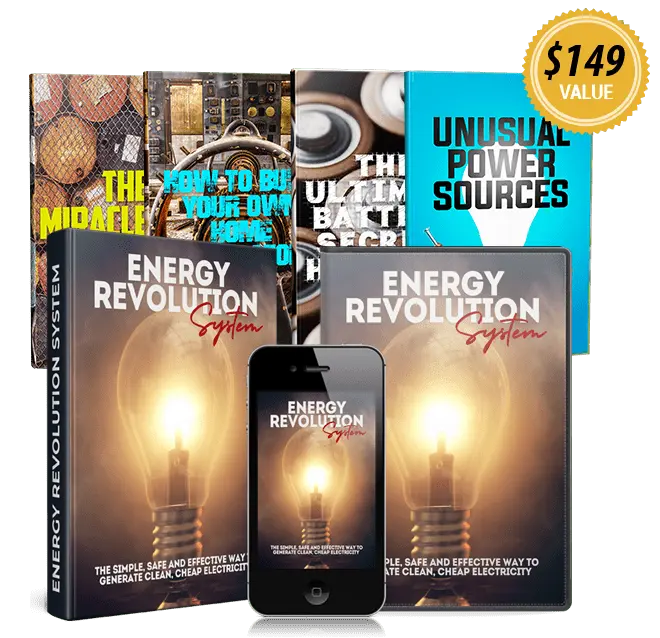
Energy Revolution System has attracted attention because its marketing presents a DIY approach to generating or supplementing household electricity using a Tesla-inspired electrical design. That naturally leads to the most important question: does Energy Revolution System really work? The honest answer requires more than a simple yes or no. The guide is presented as instructions for building a physical electrical project, while some promotional material makes much broader claims about lowering electricity costs. Those two things should be evaluated separately. In this article, we look at the concept, the science behind electromagnetic generation, what the product appears to provide, what a real-world test would need to measure, and where buyers should keep their expectations realistic.
Does Energy Revolution System Really Work? The Short Answer
There are actually two different questions hidden inside the phrase "does it work?"
The first is whether the underlying concept of using coils, magnetic fields and electromagnetic induction to produce usable electricity is scientifically plausible. That answer is straightforward: electromagnetic induction is a genuine and extensively used electrical principle.
The second question is whether a particular Energy Revolution System build can eliminate a certain percentage of your electricity bill or produce enough electricity to replace your household's normal grid supply. That answer cannot responsibly be guaranteed without measuring the actual completed system under defined conditions.
This distinction is extremely important because online advertisements can compress complicated engineering questions into simple phrases such as "free energy," "zero bills" or "energy on demand." Those phrases may attract attention, but they do not tell you how much useful energy a particular system actually produces.
What Are You Actually Buying With Energy Revolution System?
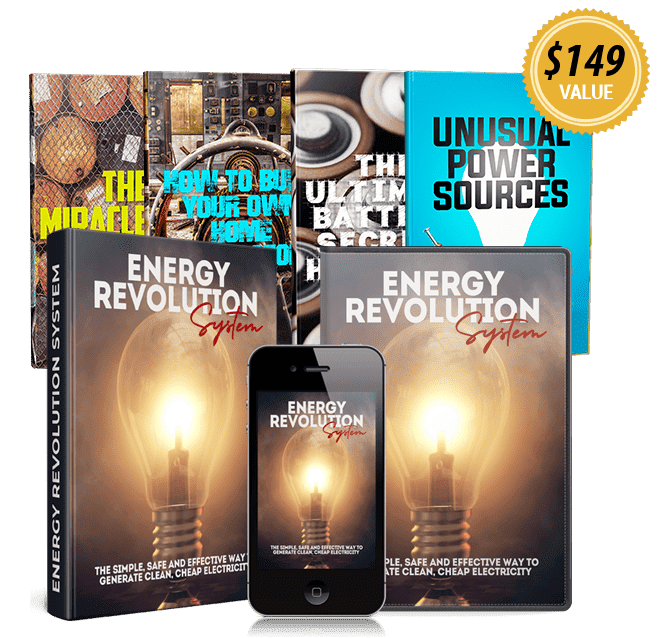
One of the first things a potential buyer should understand is the product format. Energy Revolution System is marketed as a digital instructional product rather than a conventional ready-made generator.
That means the purchase should not be viewed in the same way as ordering a portable power station from an electronics retailer. The purpose of the guide is to explain the proposed project and give the user the information needed to construct it.
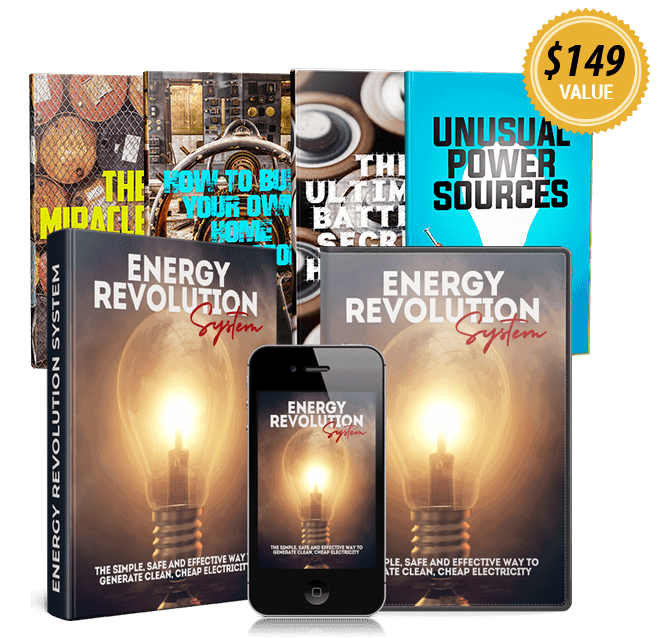
Depending on the current package, instructional material may include guides, diagrams, component information and other educational resources. Physical parts are a separate consideration.
This is why it is useful to calculate the total project cost rather than looking only at the digital guide's advertised price. A DIY electrical project can require wires, magnets, connectors, tools, measuring equipment, batteries or other components.
What You Should Confirm Before Buying
- What exactly is included with the digital purchase?
- Is the product a guide rather than a finished machine?
- Which physical components are required?
- Are the components included or purchased separately?
- What refund or guarantee terms currently apply?
- What bonuses or supplementary materials are included in the current offer?
How Does Energy Revolution System Work?
The Energy Revolution System concept is based around electrical and electromagnetic components. While the exact construction details should be taken from the current guide itself, the general idea involves a coil arrangement, magnetic interaction and electrical connections intended to produce usable output.
Step 1: Building the Coil
Coils are fundamental components in electrical engineering. A wire carrying current produces a magnetic field, and changing magnetic conditions can induce voltage in nearby conductors.
The product's presentation gives particular attention to a bifilar-style coil. A bifilar winding uses two lengths of wire arranged together according to a specific winding pattern.
Step 2: Creating the Magnetic Interaction
Magnets can create strong magnetic fields. When magnets and coils interact in the appropriate way, movement or changing magnetic flux can result in an induced electrical voltage.
Step 3: Connecting the Electrical Circuit
The generated electrical output has to travel through an appropriate circuit. At this point, conductor resistance, component ratings, connections and insulation become important.
Step 4: Measuring the Output
A real evaluation should measure voltage and current under load. Power is related to both voltage and current, so observing voltage alone is not enough to determine whether a system can meaningfully power an appliance.
Step 5: Comparing Input and Useful Output
The most important measurement is the overall energy balance. If a system requires an external energy source, that input needs to be considered when judging how much useful energy the system provides.
The Science Behind the Energy Revolution System Concept
To determine whether Energy Revolution System is plausible, it helps to separate the science of electrical generation from the marketing language surrounding the product.
Generators do not create energy from nothing. They convert available energy from one form into electrical energy. Depending on the generator, that input may come from mechanical motion, sunlight, chemical energy, flowing water, wind or another energy source.
Electromagnetic induction is one of the central principles used by conventional generators. A changing magnetic field can induce voltage in a conductor. That voltage can drive current when an electrical load is connected.
Why the Coil Matters
A coil is essentially a conductor arranged in loops. Its geometry influences electrical characteristics such as inductance and distributed capacitance. Engineers use different coil structures because different applications require different electrical behavior.
Why Energy Losses Matter
No practical electrical system is perfectly efficient. Wires have resistance. Components heat up. Bearings, motors and mechanical systems experience friction. Magnetic materials experience losses. Electronics can also consume power.
Therefore, if a marketing claim suggests that a small device can continuously generate large quantities of electricity without an identifiable energy input, the claim deserves careful scrutiny.
What About the Tesla Connection?
Nikola Tesla's name appears prominently in marketing for Energy Revolution System, particularly in connection with the bifilar pancake coil.
Tesla's work in electrical engineering and his patents are genuine historical subjects. His experiments covered alternating current systems, high-frequency electrical phenomena, coils and many other areas.
But there is an important logical distinction here. A modern product can be inspired by an historical invention without having the same performance characteristics as a Tesla experiment, laboratory apparatus or historical patent.
A Tesla Reference Is Not a Performance Guarantee
When evaluating Energy Revolution System, the useful question is not simply whether Tesla's name appears in the material. Instead, ask what the finished device actually does under measurable conditions.
This approach lets you appreciate the historical electrical concepts while still applying ordinary engineering standards to a modern product.
What Energy Revolution System Claims Should You Be Careful With?
The biggest mistake a buyer can make is treating every sentence on a sales page as an independently verified engineering result. Strong marketing language and measurable technical evidence are not the same thing.
| Type of Claim | What You Should Ask |
|---|---|
| Large Electricity-Bill Savings | What was the original electricity usage, what system was installed, and how was the reduction measured? |
| Free Energy | What is the actual energy source? What input is required to produce the claimed electrical output? |
| Energy On Demand | What is the continuous wattage and how long can the system operate under load? |
| Whole-Home Power | What measured output is available, and does it cover the starting and running requirements of household appliances? |
| Easy Installation | Does "easy" mean easy to understand, or does it mean no technical knowledge or tools are required? |
| Fast Results | Is the stated time referring to reading the guide, assembling the device or achieving useful operating output? |
None of these questions automatically means that a product is bad. They simply help you translate advertising language into measurable engineering questions.
How Would You Properly Test Energy Revolution System?
If someone wants to determine whether their Energy Revolution System build really works, the best approach is a controlled measurement rather than relying on appearance or a single successful demonstration.
Measure the Voltage
Voltage tells you the electrical potential difference available at a point in the circuit. It is useful, but voltage by itself does not tell you how much usable power the system can provide.
Measure the Current
Current tells you how much electrical charge is flowing under the measured conditions. Combining voltage and current provides a much more useful picture of available power.
Measure Power Under Load
A device that produces an impressive open-circuit voltage may perform very differently when a real electrical load is connected. Testing under an appropriate load is therefore important.
Track the System Over Time
One brief test does not necessarily tell you whether the system can operate consistently. Recording performance over an extended period can provide more useful information.
Calculate the Energy Balance
Finally, compare the energy required to operate the complete setup with the useful electricity delivered to the load. This is the step that turns an interesting experiment into a meaningful energy-performance evaluation.
What Can You Realistically Expect From Energy Revolution System?
Expectations are probably the most important part of this entire review. A small DIY electrical generator and a complete residential renewable-energy installation are not equivalent systems.
A low-output device may potentially be useful for appropriate small loads if the final build produces enough stable electricity. Small lighting, electronics or other low-power applications require much less power than large heating or cooling appliances.
By contrast, central air conditioning, electric heating, electric water heaters, dryers and other large appliances can require substantial amounts of power. A system that can operate a small electronic device cannot automatically be assumed to handle those loads.
| Expectation | What a Buyer Should Verify |
|---|---|
| Small electronics | Actual continuous wattage available from the completed system. |
| Lighting | Output stability and operating duration under load. |
| Battery charging | Charging voltage, current and appropriate battery-management equipment. |
| Power tools | Starting current and continuous power requirements. |
| Refrigerator | Running and startup requirements, plus safe inverter capability where applicable. |
| Air conditioner | High startup and continuous power requirements make verification particularly important. |
| Whole-home operation | Requires a properly designed system sized for the home's actual demand and electrical configuration. |
This does not mean a DIY energy system has no value. It means that its useful role should be determined from measurable capability instead of assuming that a small device can perform every task handled by the electrical grid.

Energy Revolution System Features: What Does the Guide Offer?
The following table focuses on the type of material a buyer should expect from the product presentation rather than claiming that every version of the offer contains exactly the same files.
| Feature | Purpose |
|---|---|
| Digital Instructions | Explain the proposed build and project process. |
| Visual Diagrams | Help readers understand component positioning and connections. |
| Parts Information | Helps users identify the physical components needed for the project. |
| Coil-Based Design | Introduces the electromagnetic component central to the product concept. |
| Educational Material | Provides background around the proposed electrical approach. |
| Bonus Resources | Additional material may be included depending on the current offer. |
Energy Revolution System Cost: What Will You Really Spend?
The price of the digital guide is only one part of the total cost. This is particularly important for a DIY project because the buyer may have to obtain the physical materials independently.
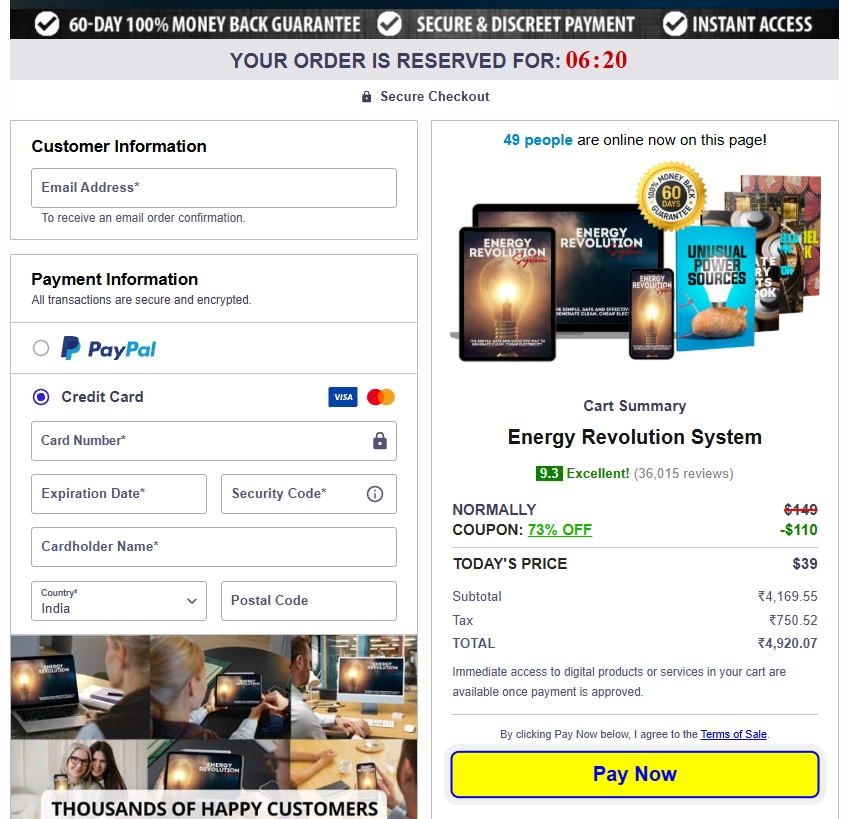
Online promotional pages for the product have shown discounted prices at different levels, so the amount shown in an old article or screenshot should not be treated as permanently fixed. The live checkout page is the best place to verify the price available at the time you purchase.
Potential Additional Expenses
- Copper or other suitable wire.
- Magnets and related hardware.
- Connectors and electrical components.
- Tools required for assembly.
- Testing or measuring equipment.
- Protective electrical equipment and suitable enclosure materials.
Energy Revolution System Pros and Cons
| Potential Advantages | Potential Limitations |
|---|---|
| Digital format makes the information convenient to access. | It is not the same thing as receiving a finished generator. |
| Interesting for people who enjoy DIY projects. | Physical components may need to be purchased separately. |
| Can introduce practical electromagnetic concepts. | Electrical construction requires care and appropriate knowledge. |
| The project can be tested through measurable electrical output. | Marketing claims should not be treated as guaranteed performance. |
| May be useful as a learning or experimental project. | A small build should not automatically be assumed to provide whole-home power. |
Who Is Energy Revolution System Best Suited For?
Energy Revolution System is likely to be more interesting to someone who enjoys learning and building than to a buyer who wants a finished appliance with no assembly required.
It May Interest:
- DIY electronics enthusiasts.
- People curious about electromagnetic systems.
- Hobbyists who enjoy electrical experiments.
- Homeowners exploring supplemental-power ideas.
- Learners interested in generator concepts.
It May Be Less Suitable For:
- Someone seeking an instant plug-and-play generator.
- Someone who does not want to assemble or troubleshoot equipment.
- Someone expecting guaranteed whole-home electricity.
- Someone unwilling to follow electrical safety procedures.
Energy Revolution System Alternatives
It is useful to compare Energy Revolution System with other power options because the right solution depends on what you actually want to accomplish.
| Option | Potential Advantage | Important Difference |
|---|---|---|
| Energy Revolution System | DIY learning and experimentation. | Requires construction and evaluation. |
| Portable Power Station | Convenient backup electricity. | Usually purchased as a finished product. |
| Solar Generator | Can combine solar charging and battery storage. | Depends on solar availability and battery capacity. |
| Residential Solar | Designed for larger renewable-energy applications. | Usually involves substantially greater installation cost. |
| Battery Backup | Useful for maintaining selected loads during outages. | Requires appropriate sizing and installation. |
| Traditional Generator | Can provide significant output when correctly sized. | May require fuel, maintenance and appropriate ventilation. |
What Should You Know About Energy Revolution System Reviews?
Searching for "Energy Revolution System reviews" can produce very different opinions. Some pages describe the guide positively, while other commentary focuses heavily on the product's advertising language.
That disagreement makes one thing especially important: do not judge the entire product from one testimonial, one angry comment or one enthusiastic sales story.
Instead, look for evidence about what the purchaser actually received. Was it a digital guide? Were there diagrams? Were there parts instructions? What did the buyer expect before purchasing? Were the expectations reasonable? Were the physical materials included?

Reviews can be useful for understanding buyer experiences, but personal experiences should not be confused with controlled technical testing. A person's statement that something "worked" may mean that it produced some electrical output, not necessarily that it replaced most of their household electricity consumption.

Frequently Asked Questions About Whether Energy Revolution System Works
1. Does Energy Revolution System really work?
The underlying electrical concepts involving coils and electromagnetic induction are real. However, the practical performance of a particular Energy Revolution System build depends on its construction, components, energy input and operating conditions. Specific electricity savings should be verified through measurement.
2. Is Energy Revolution System a free-energy machine?
It should not be interpreted as creating unlimited energy from nothing. Real electrical systems require an energy source and experience losses during conversion and operation.
3. Does it eliminate an electricity bill?
There is no universal guarantee that it will eliminate a household electricity bill. Any reduction depends on actual energy production and how much of the home's consumption the system can offset.
4. What is the Tesla connection?
The product presentation references Tesla-inspired coil concepts. Historical Tesla inventions are real, but that historical connection does not automatically prove the performance of a modern DIY implementation.
5. Do I receive a physical generator?
Energy Revolution System is presented primarily as a digital instructional product. Buyers should carefully read the current offer to understand exactly what is delivered.
6. Do I need to buy parts?
A DIY guide generally requires the user to obtain physical components separately unless the current offer explicitly states otherwise.
7. Can it power my entire home?
Do not assume that capability. Whole-home systems need to be sized according to actual electrical demand, including the startup requirements of major appliances.
8. Can I use it to charge small devices?
That depends on the measured output of the completed build and the equipment used to regulate and deliver that output. Appropriate electrical specifications should be verified before connecting a device.
9. Is Energy Revolution System suitable for beginners?
The product is presented as accessible to people interested in DIY construction, but electrical projects should always be approached according to the user's actual skill level. Professional assistance may be needed for higher-risk electrical work.
10. Is there a money-back guarantee?
Promotional pages have advertised a 60-day money-back guarantee, but buyers should verify the exact terms displayed on the current checkout page before purchasing.
11. Is the product worth buying?
Its value depends on expectations. A person looking for a DIY educational project may evaluate it very differently from someone who needs a professionally engineered whole-home power solution.
12. What is the best way to judge whether it works?
Measure the system's voltage, current, power under load, operating duration and energy input. Those measurements provide much more useful information than an advertising headline alone.
Final Answer: Does Energy Revolution System Really Work?
So, does Energy Revolution System really work? The most responsible answer is that the question needs to be broken into two parts.
The electrical principles behind coils, magnetic fields and electromagnetic induction are genuine. A correctly designed electrical generator can absolutely produce useful electrical output through established physical principles.
But that does not mean every broad claim made in online advertising should be accepted automatically. A specific percentage of electricity savings, whole-home capability or a promise of dramatically reduced utility bills requires evidence from the actual system and the actual circumstances in which it operates.
For that reason, the best way to approach Energy Revolution System is as a DIY guide and learning project. Understand what you are purchasing, calculate your component costs, follow the instructions carefully, measure the completed system and keep your expectations connected to the amount of energy the system actually produces.
If your main goal is to experiment with electrical concepts and explore a hands-on alternative-energy project, the product may be worth investigating. If you need guaranteed, professionally installed whole-home backup electricity, compare it with established solar, battery and generator solutions before deciding.
Affiliate Disclaimer
Affiliate Disclosure: This article contains affiliate links. If you purchase Energy Revolution System through a link on this page, we may receive a commission at no additional cost to you. We aim to provide useful and transparent information so readers can make their own purchasing decisions.
Important: Product prices, bonuses, guarantees, availability and package contents may change. Statements made by sellers or promotional materials should not automatically be interpreted as guaranteed results. Actual electrical output and potential savings depend on the specific build, components, energy input, operating conditions and electricity usage.
Electrical projects can involve shock, fire, overheating and other hazards. Follow the current product instructions and applicable electrical requirements. Do not connect an experimental device to household mains wiring unless the work is appropriate, safe and performed by a suitably qualified professional.
This article is provided for informational and promotional purposes only and is not electrical, engineering, financial or legal advice.